
Overview
About the mosque
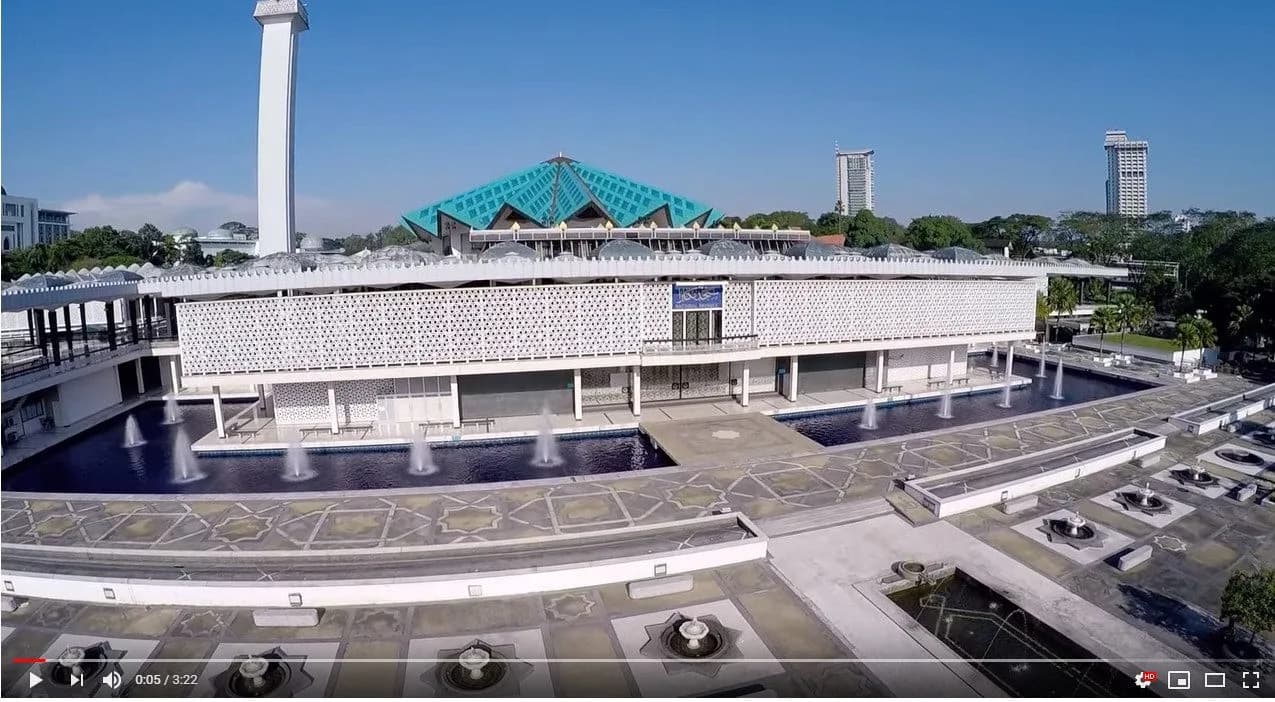
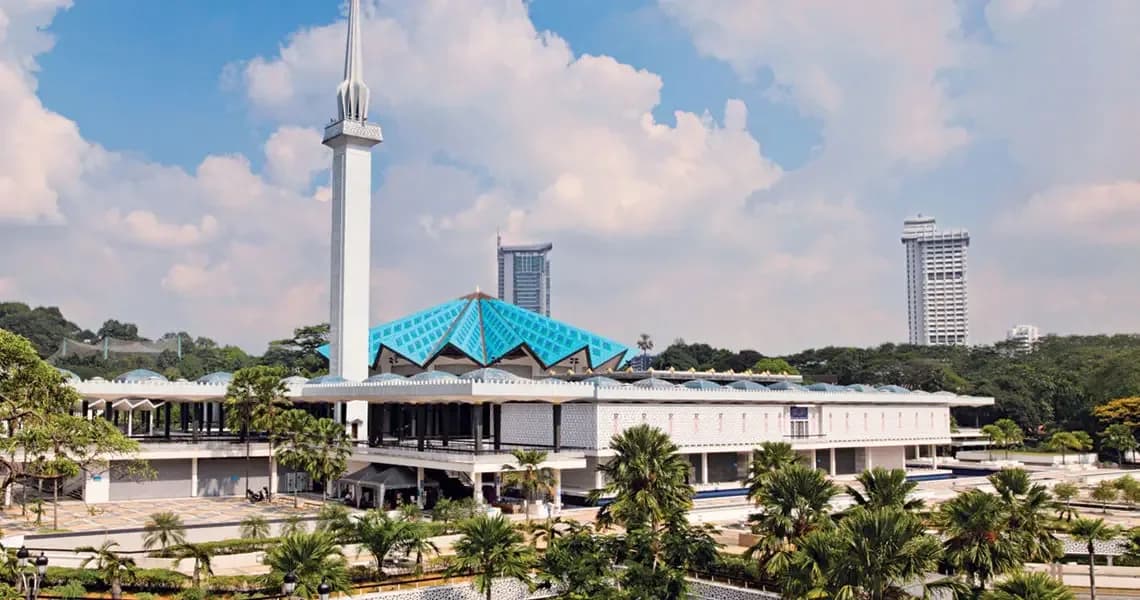
The National Mosque of Malaysia, known as Masjid Negara, was built in 1963 to commemorate the country’s independence. Officially opened in 1965, it stands as a symbol of national pride and unity. With the capacity to accommodate up to 15,000 worshipers, it is one of the largest mosques in Southeast Asia. The mosque was designed by a team of three architects, with a distinctive architectural style that merges modernism with Islamic elements. The mosque’s iconic 18-pointed star-shaped dome symbolizes Malaysia's 13 states and the Five Pillars of Islam. Originally constructed from pink concrete, the main dome was later renovated and is now adorned with striking blue and green tiles. Unlike many traditional mosques, the National Mosque features a single minaret standing at 75 feet tall, from which the call to prayer is broadcast. Strategically located in the heart of Kuala Lumpur, Masjid Negara is surrounded by prominent landmarks such as the old Malayan Railway Station, the Islamic Arts Museum, the Earth Resources Building, Pos Malaysia headquarters, the Kuala Lumpur Bird Park, and the Lake Gardens. The mosque was named by Malaysia’s first Prime Minister, Tunku Abdul Rahman, who proposed the name “Masjid Negara” to reflect Islam’s central role in the country's identity. The construction of the mosque itself is a reflection of Malaysia’s multicultural harmony. It was designed by Malay architects, built by Chinese and Indian workers, and funded not only by Muslims but also by Buddhists, Hindus, Christians, and people of other faiths. As such, the mosque stands as a testament to national unity and religious tolerance. Today, beyond serving as a place of worship, the National Mosque plays an important role as a center for learning and community activities. It hosts a variety of events including official ceremonies, public lectures, seminars, training workshops, and conferences. Additionally, the mosque grounds include open-air exhibition areas that can be used without disrupting prayer sessions. It also offers sports facilities for members to promote physical well-being alongside spiritual growth.
Background
History
Masjid Negara is a national legacy, which built between 1963 and 1965. The idea to build a national mosque to memorialize Malaysia’s independence was suggested by the Federal Executive Council a month before independence ceremony. The Chief Ministers of all eleven states in the-then Federation of Malaya brought up a proposal to name the mosque after the country’s first Prime Minister, Tunku Abdul Rahman Putra Al-Haj in March 1958 to recognize his contribution to the country’s independence. However, Tunku had declined this honour and suggested that the mosque be named Masjid Negara instead, to symbolize the country’s unity and multi-cultural harmony, as well as a way to give thanks to Allah for the country’s peaceful independence – achieved without a single drop of blood being shed.
History The Mosque’s took about three years for designing, taking inspiration from the mosque in India, Pakistan, Iran, Turkey, Saudi Arabia, the UAE and Spain. Its most significant features are its 73-metre high minaret, which resembles a folded umbrella, and its 16-point concrete roof’s unique design gives one the impression of standing beneath a gigantic open umbrella.
In the middle of the roof are engravings of Quranic verses on aluminium, inspired by Istanbul’s Blue Mosque. The mosque had undergone major renovations in 1987, replacing the colour of the concrete dome from pink to a more striking green-and-blue (Islamic Tourism Centre of Malaysia).
Where
Location
Masjid Negara, Jalan Perdana, Tasik Perdana, 50480 Kuala Lumpur, Wilayah Persekutuan Kuala Lumpur, MalaysiaOpen in Google Maps
Gallery
Photographs 18


Plans & sections
Architectural drawings 12


References
- 01en.wikipedia.org/wiki/National_Mosque_of_Malaysiaen.wikipedia.org
- 02kuala-lumpur.attractionsinmalaysia.com/National-Mosque.phpkuala-lumpur.attractionsinmalaysia.com
- 03slideshare.net/limziahuei/national-mosque-malaysiaslideshare.net
- 04malaymail.com/news/life/2015/09/05/the-man-behind-masjid-negaras-iconic-umbrella-dome/964415malaymail.com
- 05quod.lib.umich.edu/u/ummu/x-03-01627/03_01627quod.lib.umich.edu