
Overview
About the mosque
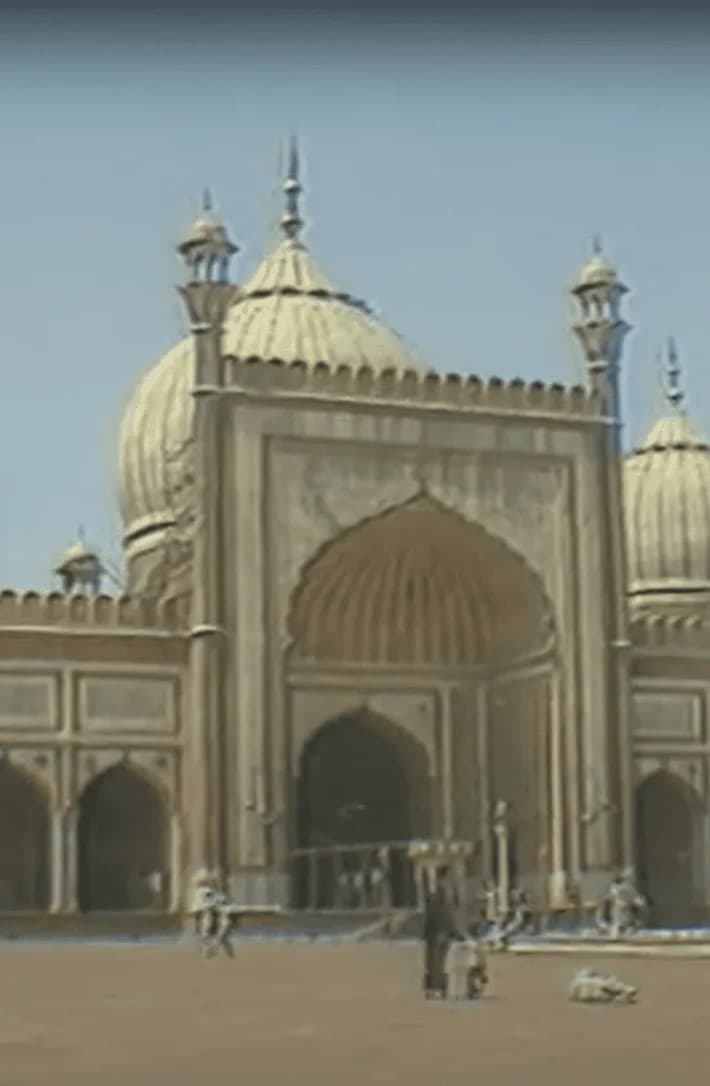
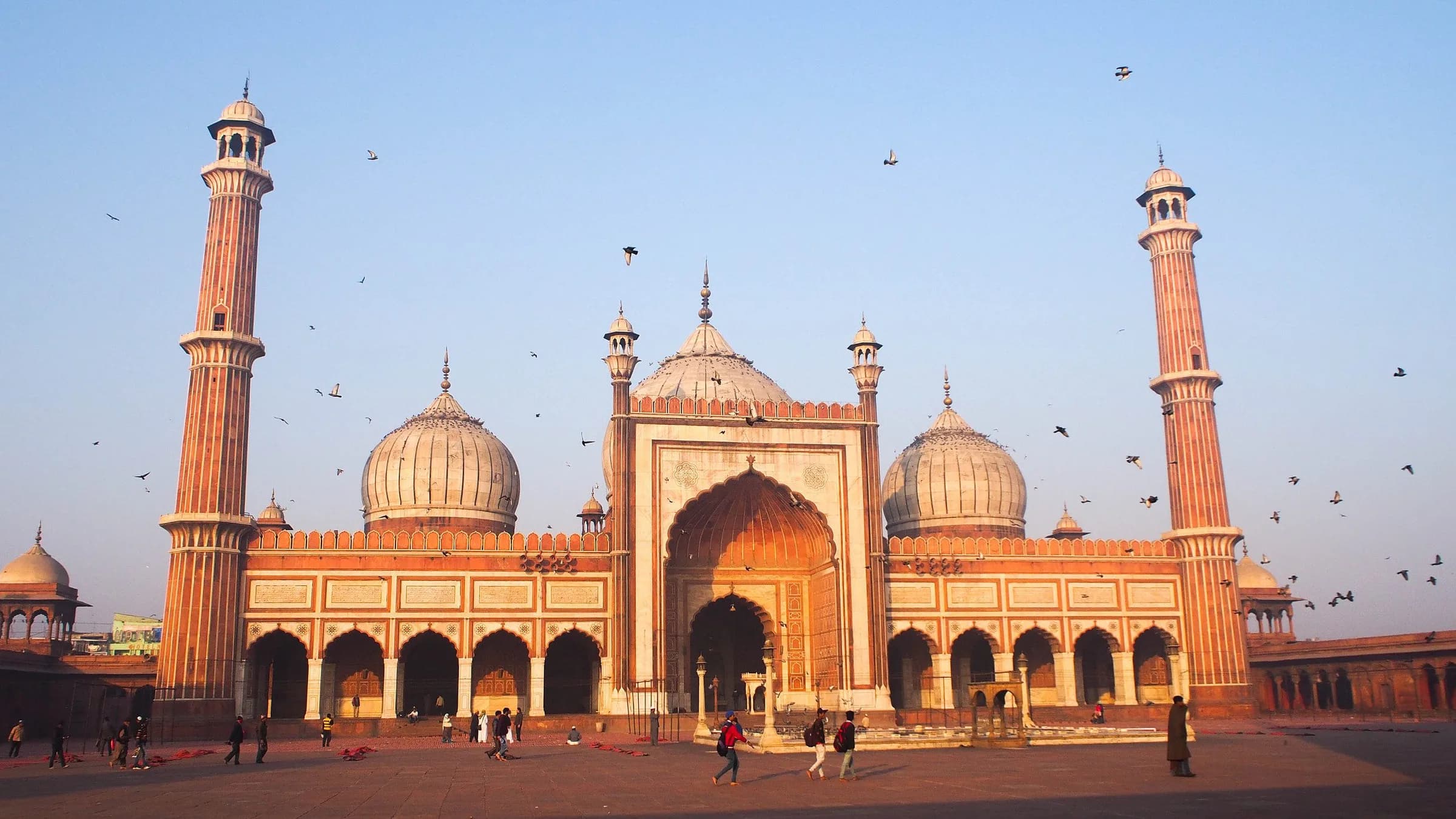
The mosque predominantly uses red sandstone, and is set apart from its predecessors by a more extensive usage of white marble. Black marble also features as a decorative element. Arabic and Persian calligraphic pieces are found on various surfaces of the structure, whose content ranges from religious to panegyric.
Having been built on a hill, the mosque is situated on a plinth elevated 10 metres above the surrounding city. The complex is oriented to the west, towards Mecca.An imperial college, imperial dispensary, and madrasa used to lie adjacent to the structure, but were destroyed in the uprisings of 1857
The mosque's domes are flanked by two sandstone minarets, at the northeast and southeast corners.hey are 40 metres high and longitudinally striped with white marble. Each minaret consists of 130 steps, along which viewing galleries occur at three places. Both minarets are topped with a marble chhatri.
Background
History
It was built by the Mughal Emperor Shah Jahan between 1650 and 1656, and inaugurated by its first Imam, Syed Abdul Ghafoor Shah Bukhari. Situated in the Mughal capital of Shahjahanabad (today Old Delhi), it served as the imperial mosque of the Mughal emperors until the demise of the empire in 1857. The Jama Masjid was regarded as a symbolic node of Islamic power across India, well into the colonial era. It was also a site of political significance during several key periods of British rule. It remains in active use, and is one of Delhi's most iconic sites, closely identified with the ethos of Old Delhi.
Where
Location
Battersea Park Millenium Arena, London SW11 4NJ, UKOpen in Google Maps
Gallery
Photographs 6


Plans & sections