
Overview
About the mosque
The frontal area of the prayer hall houses the mihrab or a chamber niche that is directed towards Mecca - which is the center direction for prayer. A wooden pulpit or mimbar is placed on the right where the leader of prayer delivers his sermon.
As the mosque caters to the Indian Muslim devotees, the sermon is conducted in Tamil. A tall, grandfather clock on the left side of the mihrab tells the time through the round, wall mounted clock built at the top.
At the left corner, visitors can find a medium-sized table and a cabinet that are used to display plaques and commemorative items received by the mosque. The natural sunlight brightens the mosque during the day through its long, square-trimmed framed window.
The place for ablution is typically built at the back. The same rules apply at Masjid India Muslim Ipoh where the semi-circular walls with mounted water taps are located at the very end just outside of the prayer hall.
Background
History
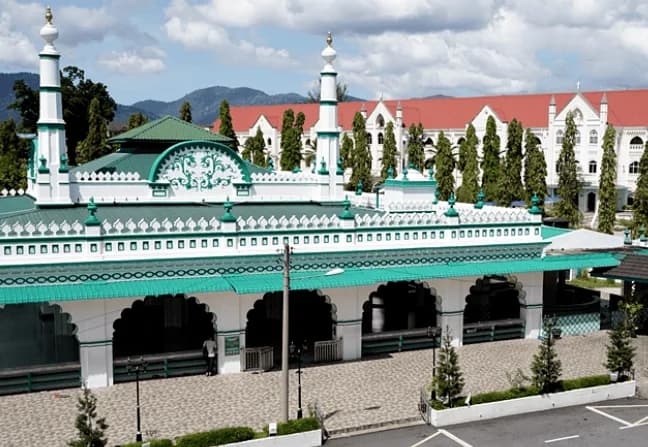
India Muslim Ipoh Mosque was built in 1905 by Indian laborers brought in as labor by a affluent Indian Muslim head honcho by the title of Shaik Adam Mohammad Ghaus. He was the founder of Kinta Ice Works and Kinta Aerated Water Factory, and was accepted to be the sole provider of ice within the town at that time.
The mosque was completed in 1908 with a plan that was intensely affected by the Diwan-i-Khas at the Ruddy Fort in Delhi which may be a reflection of “Chitya Indian” or Moghul-style engineering. The rectangle-shaped building encompasses a level terraced roof and verandas on its sides. One of the more unmistakable highlights are the scallop cusped curves that are built all around the mosque.
Where
Location
Battersea Park Millenium Arena, London SW11 4NJ, UKOpen in Google Maps
Gallery
Photographs 6


Plans & sections