
Overview
About the mosque
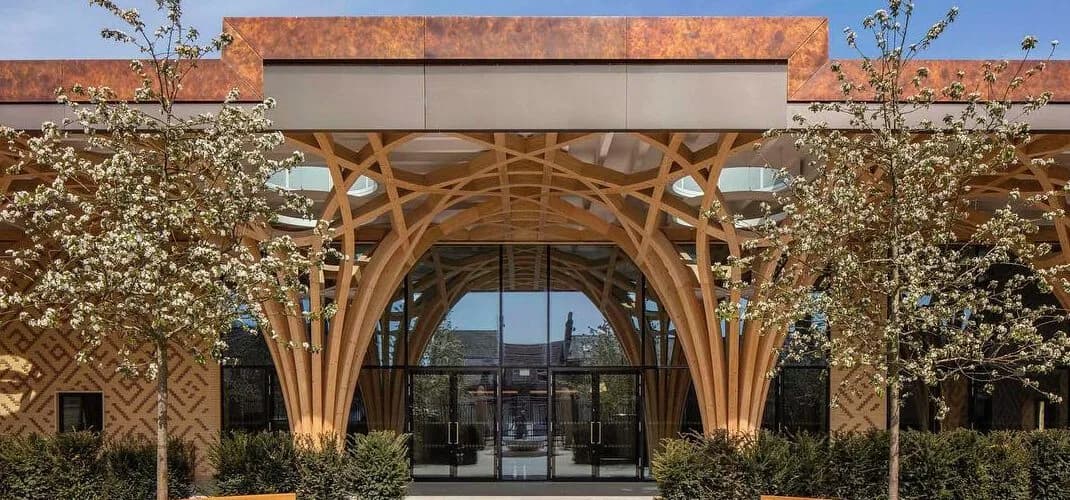
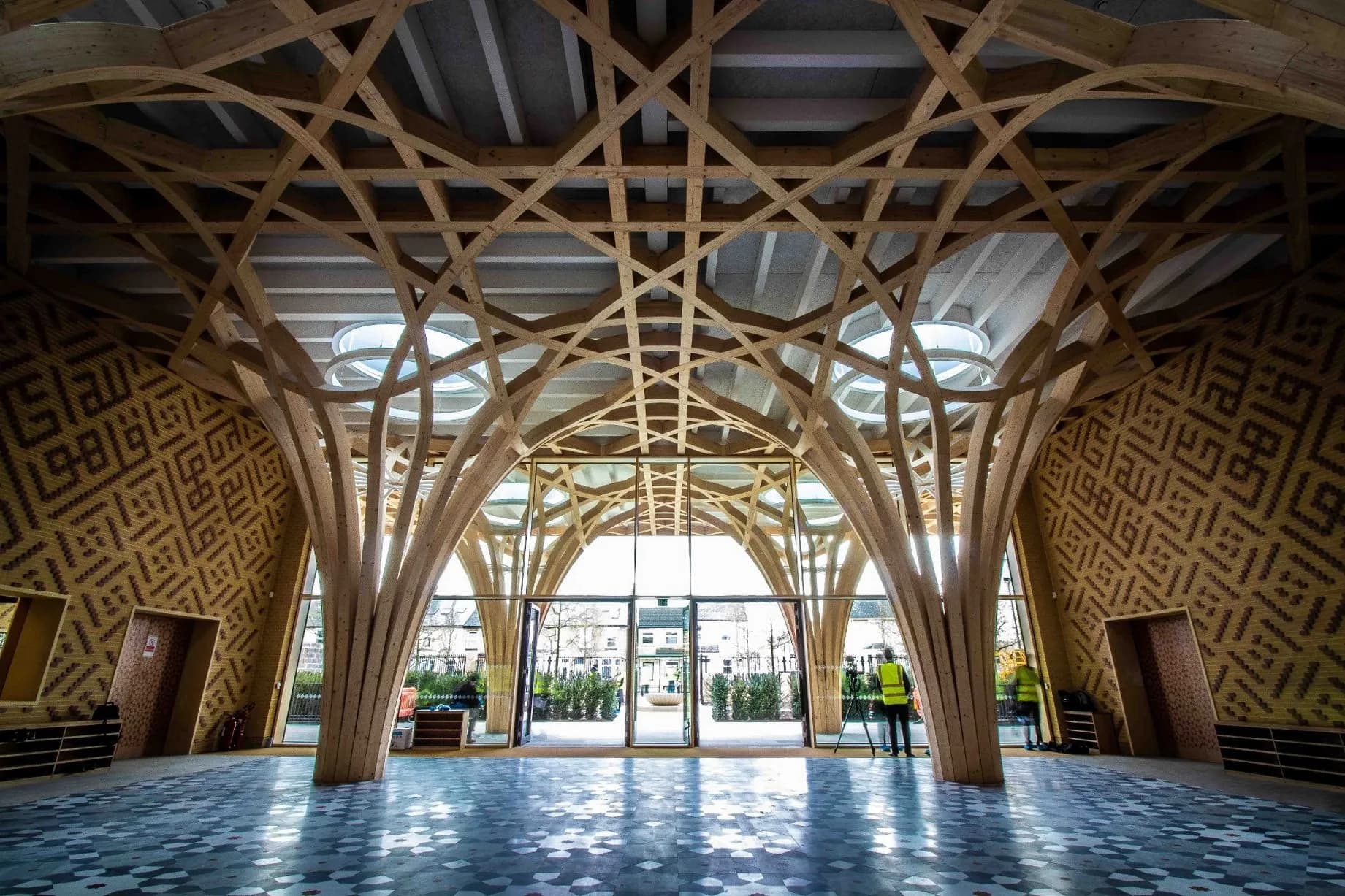
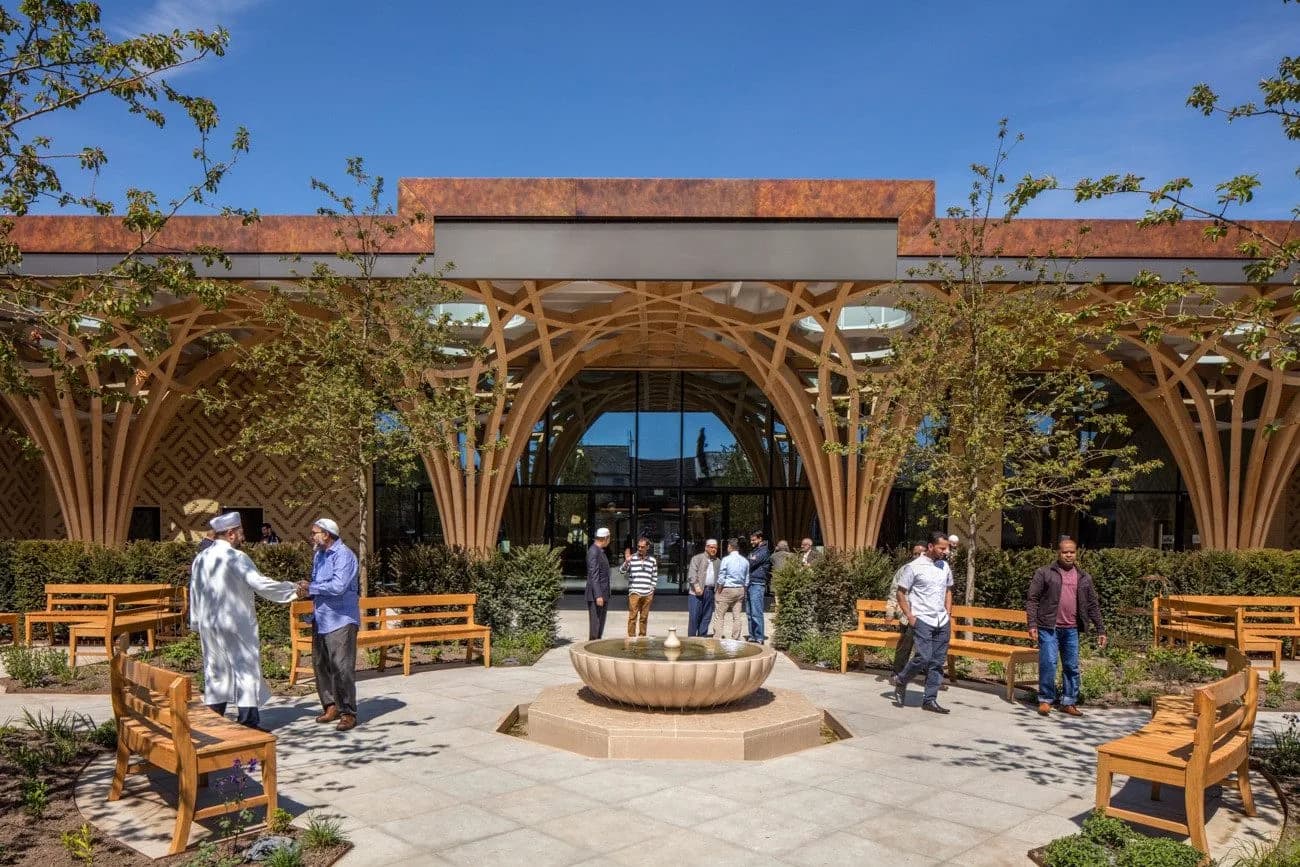
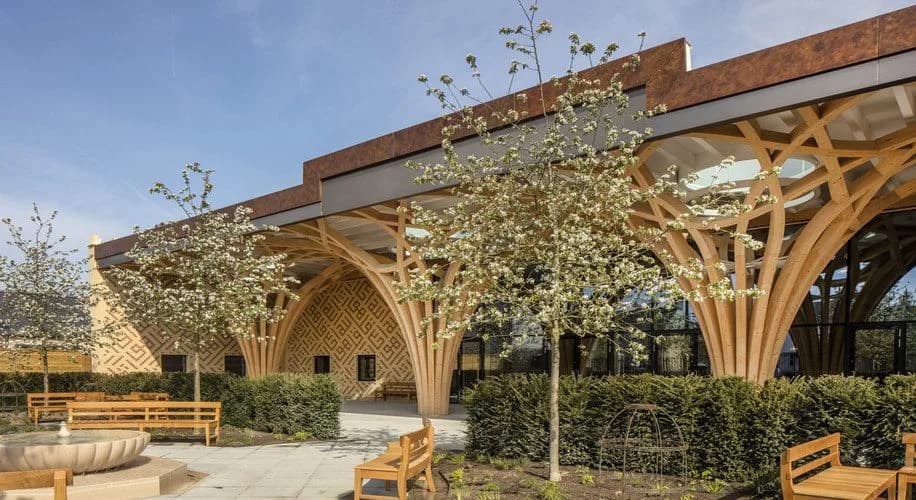
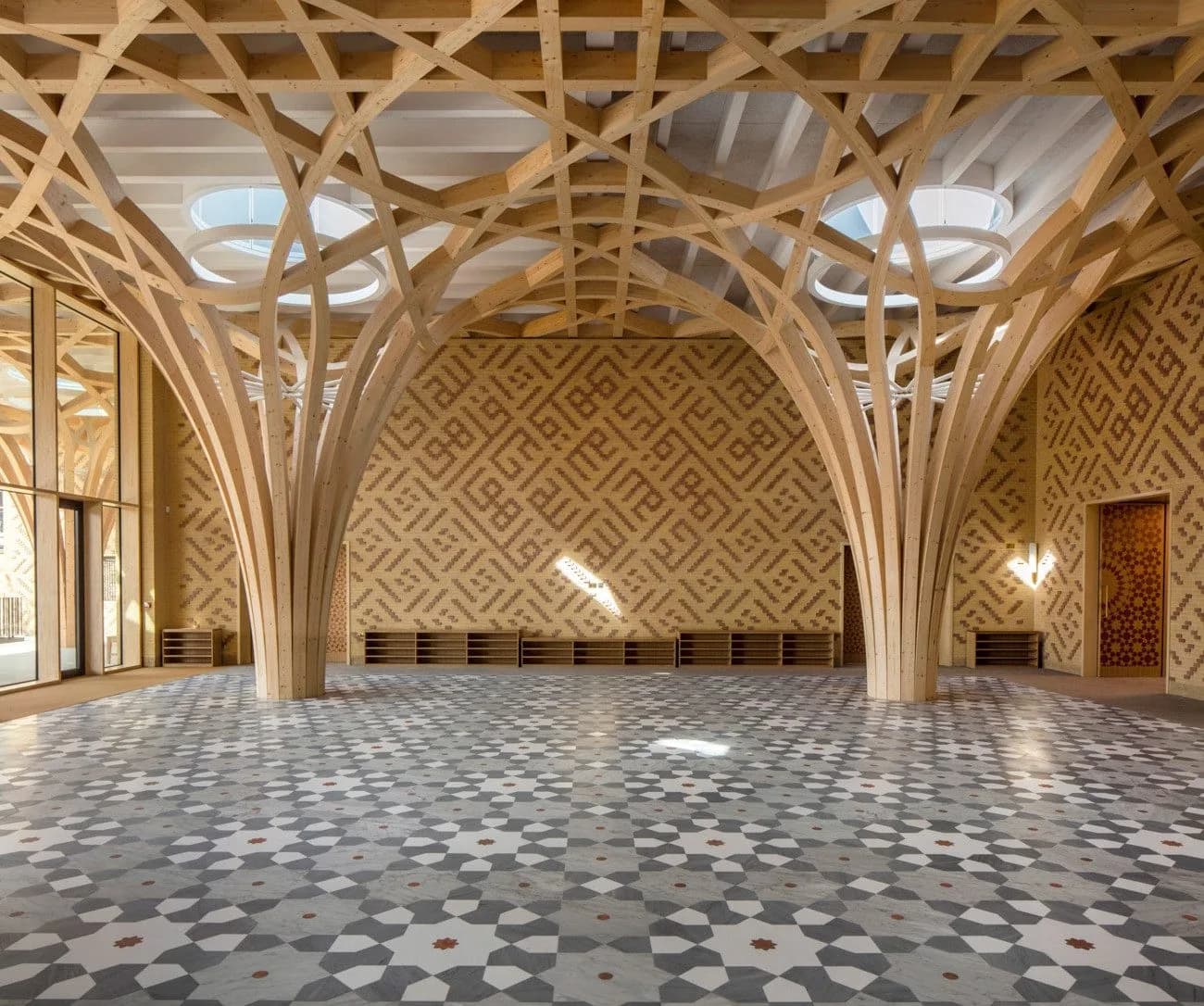
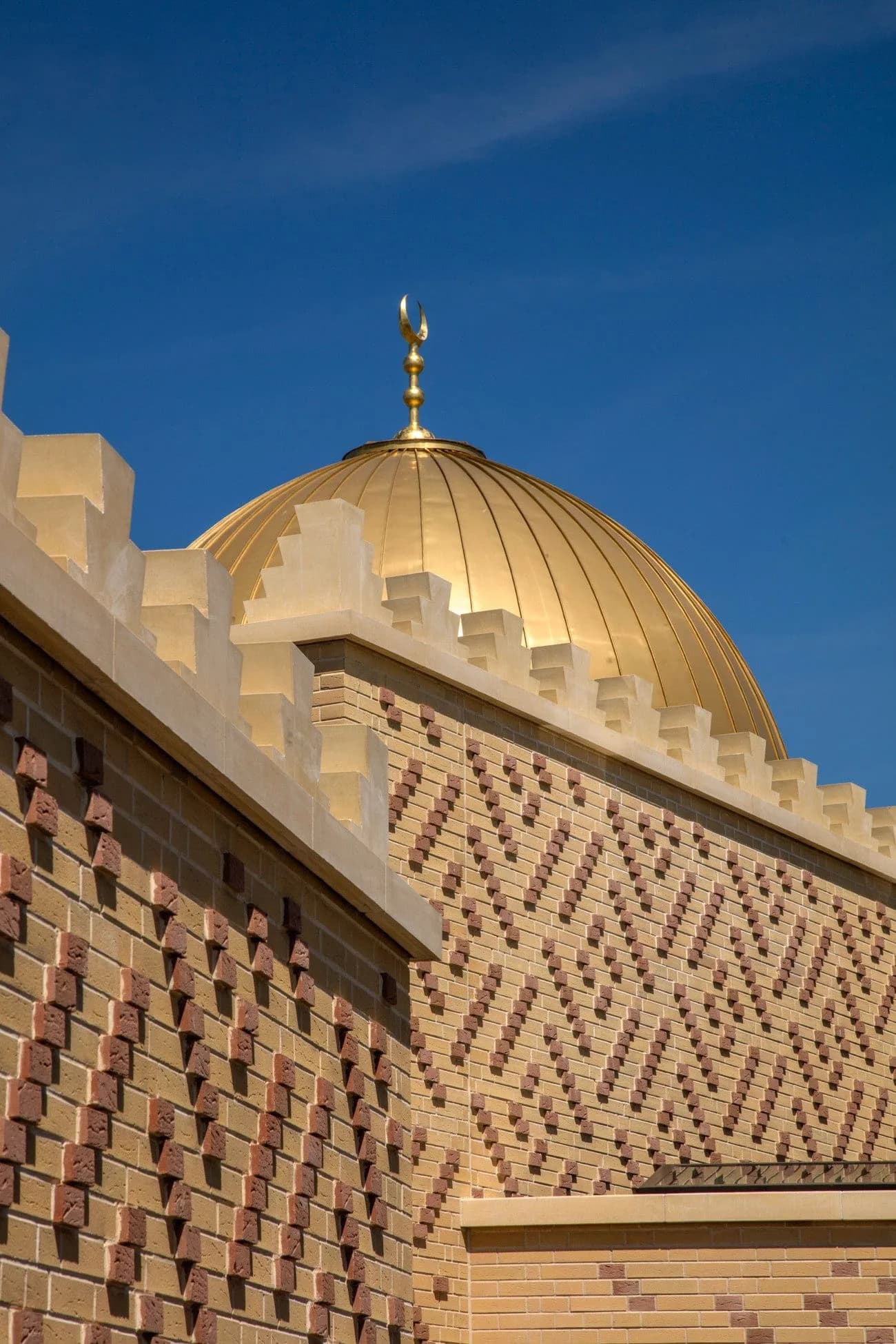
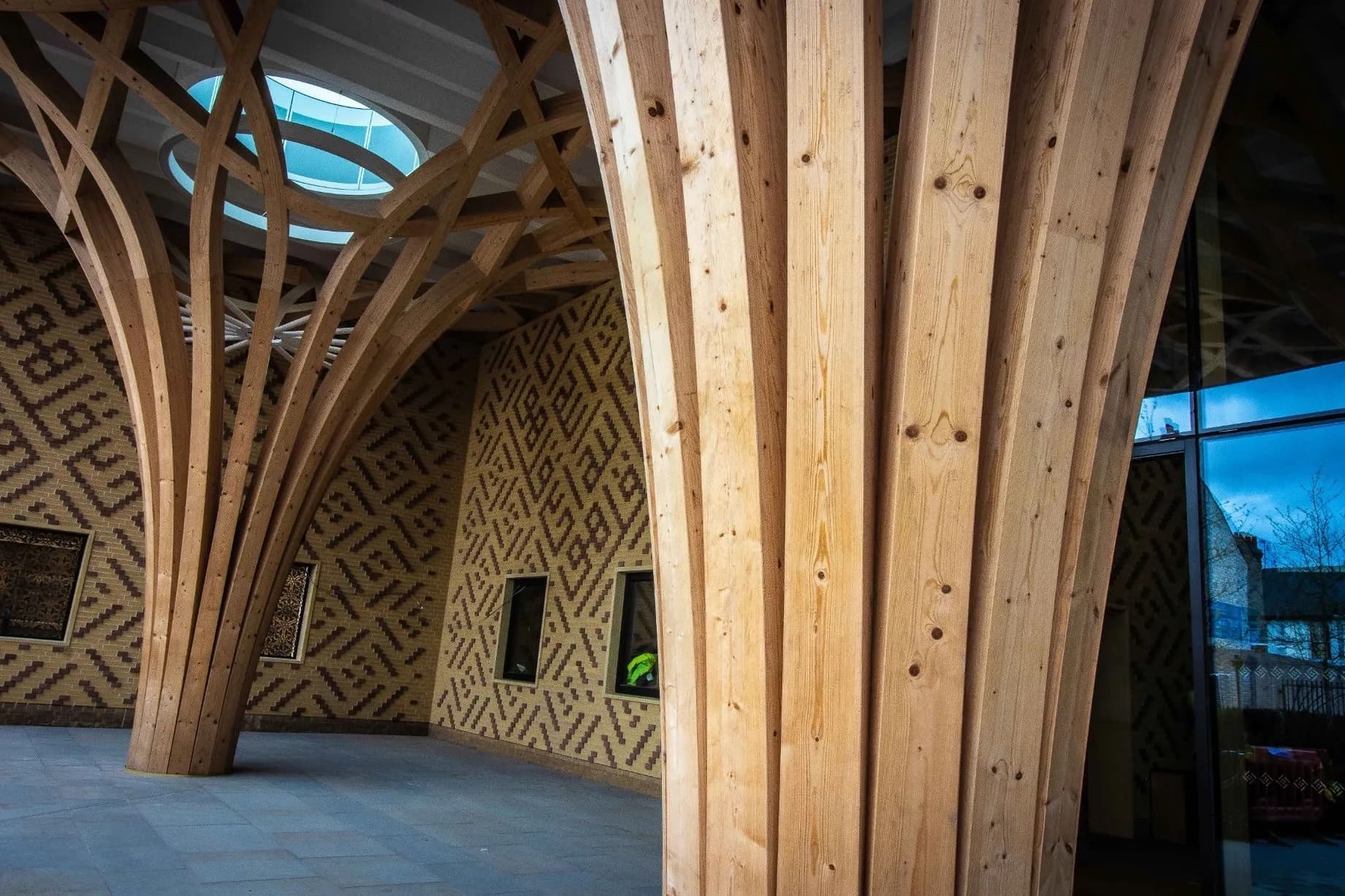
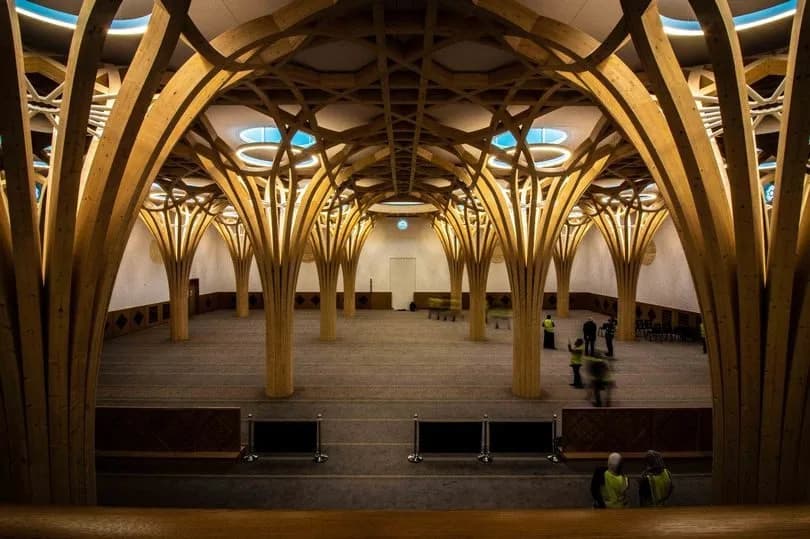
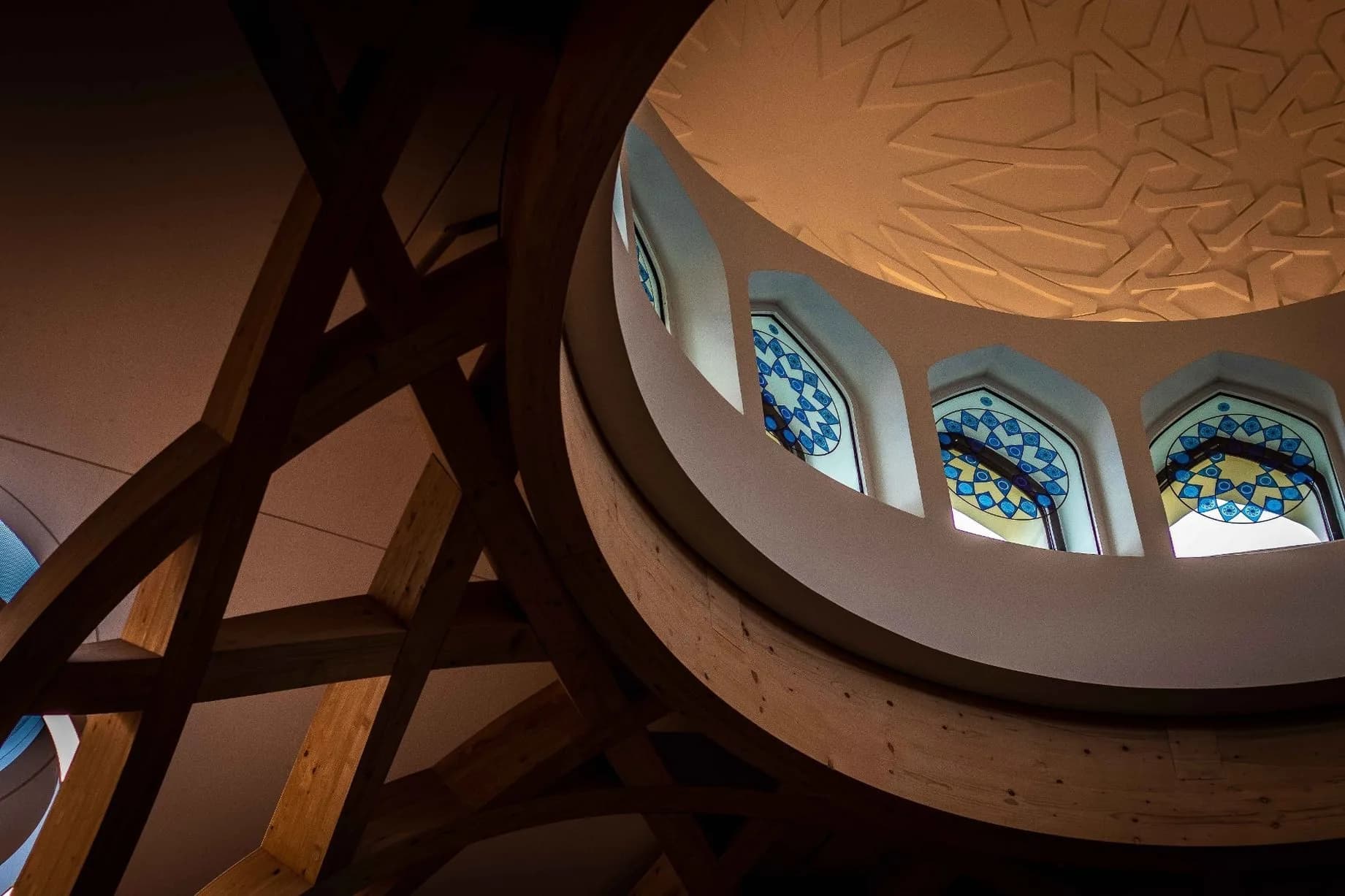
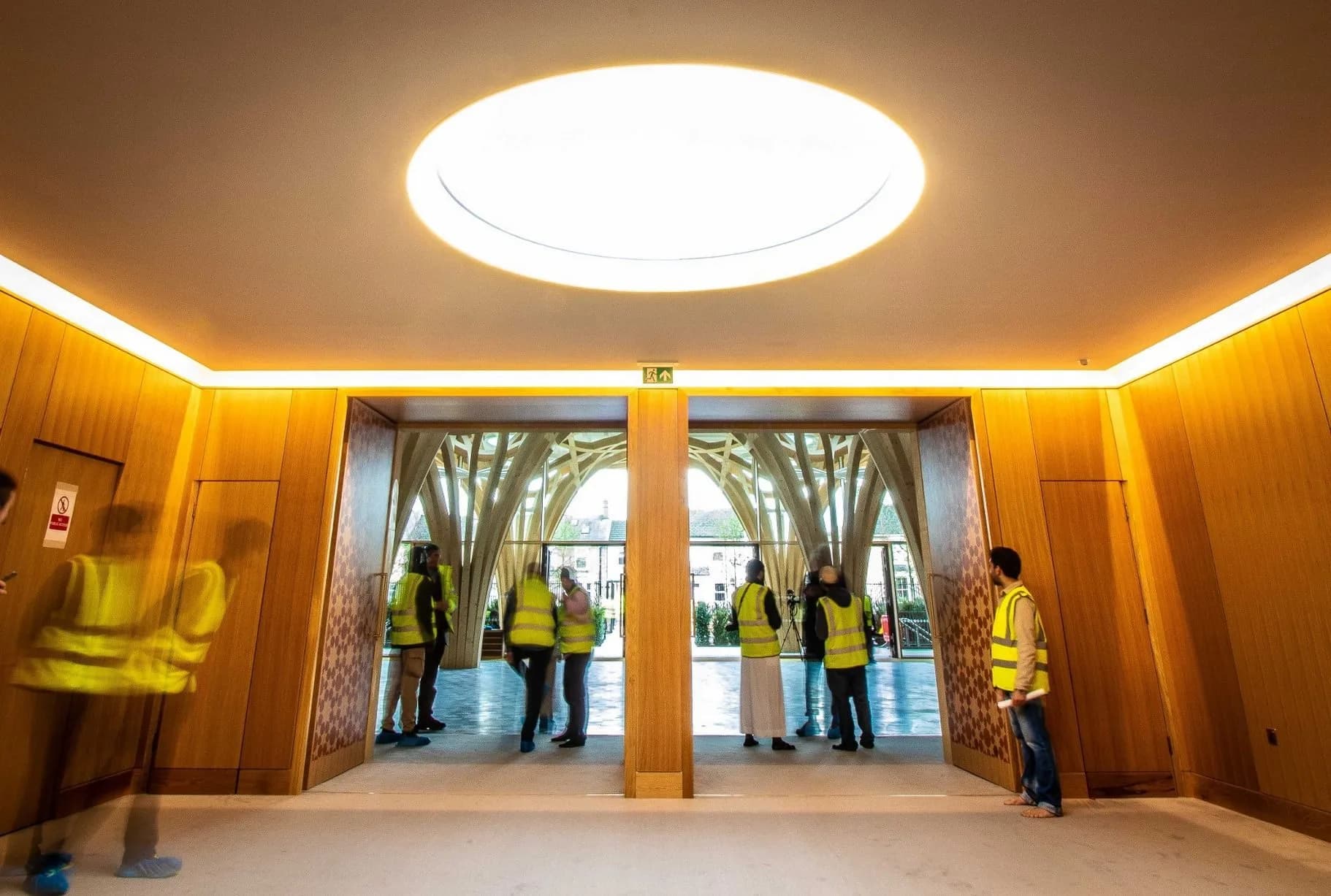
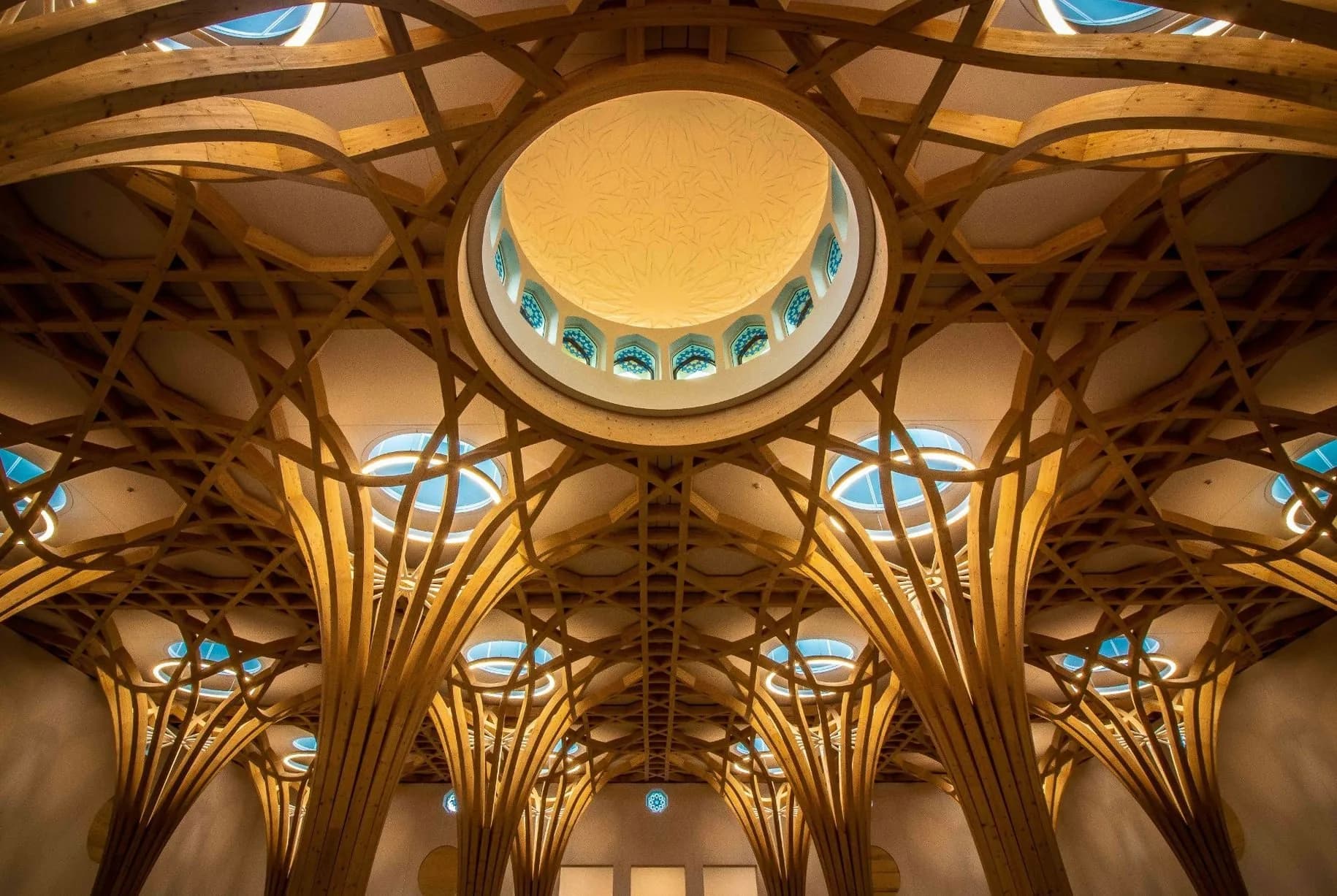
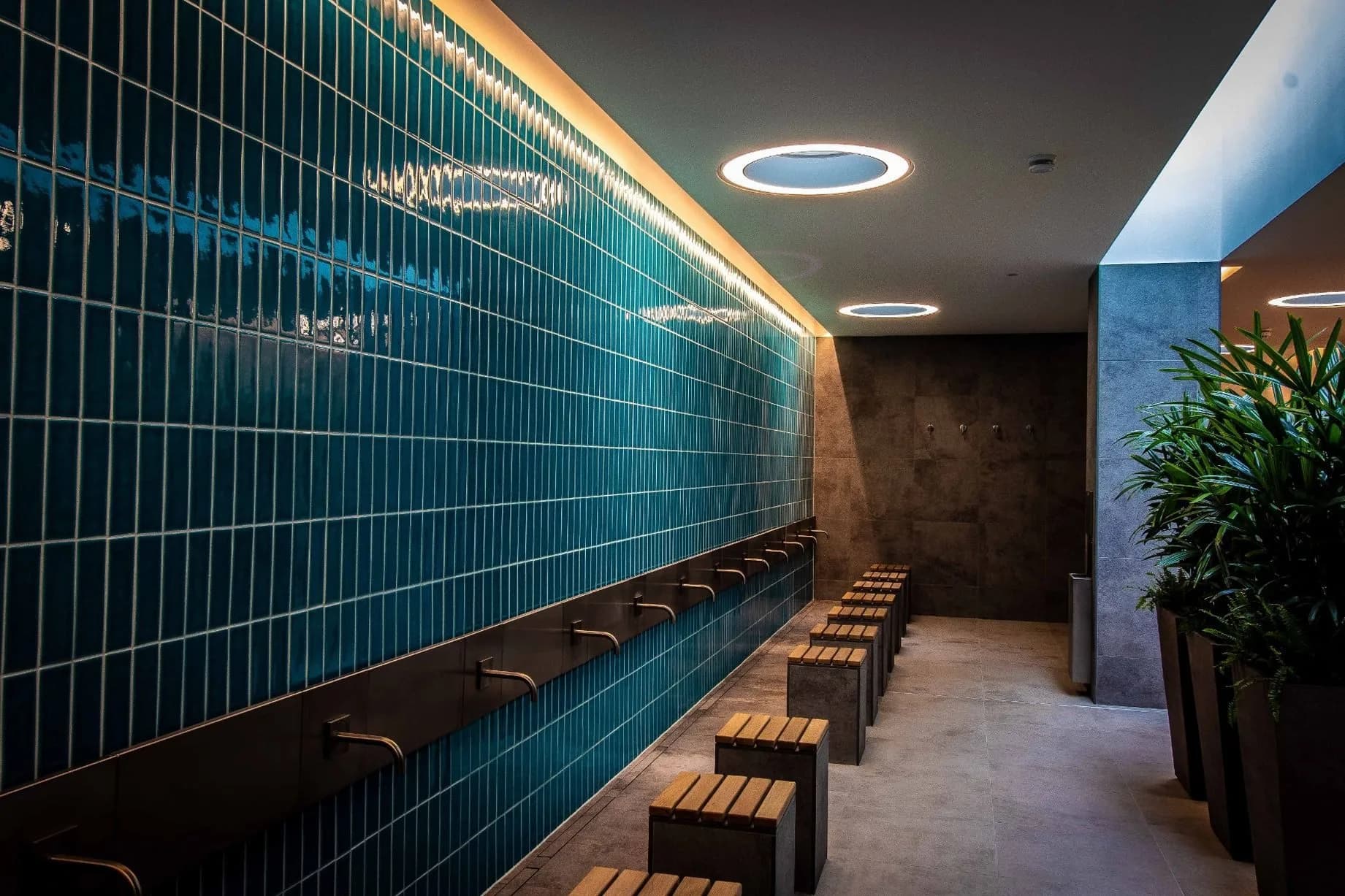
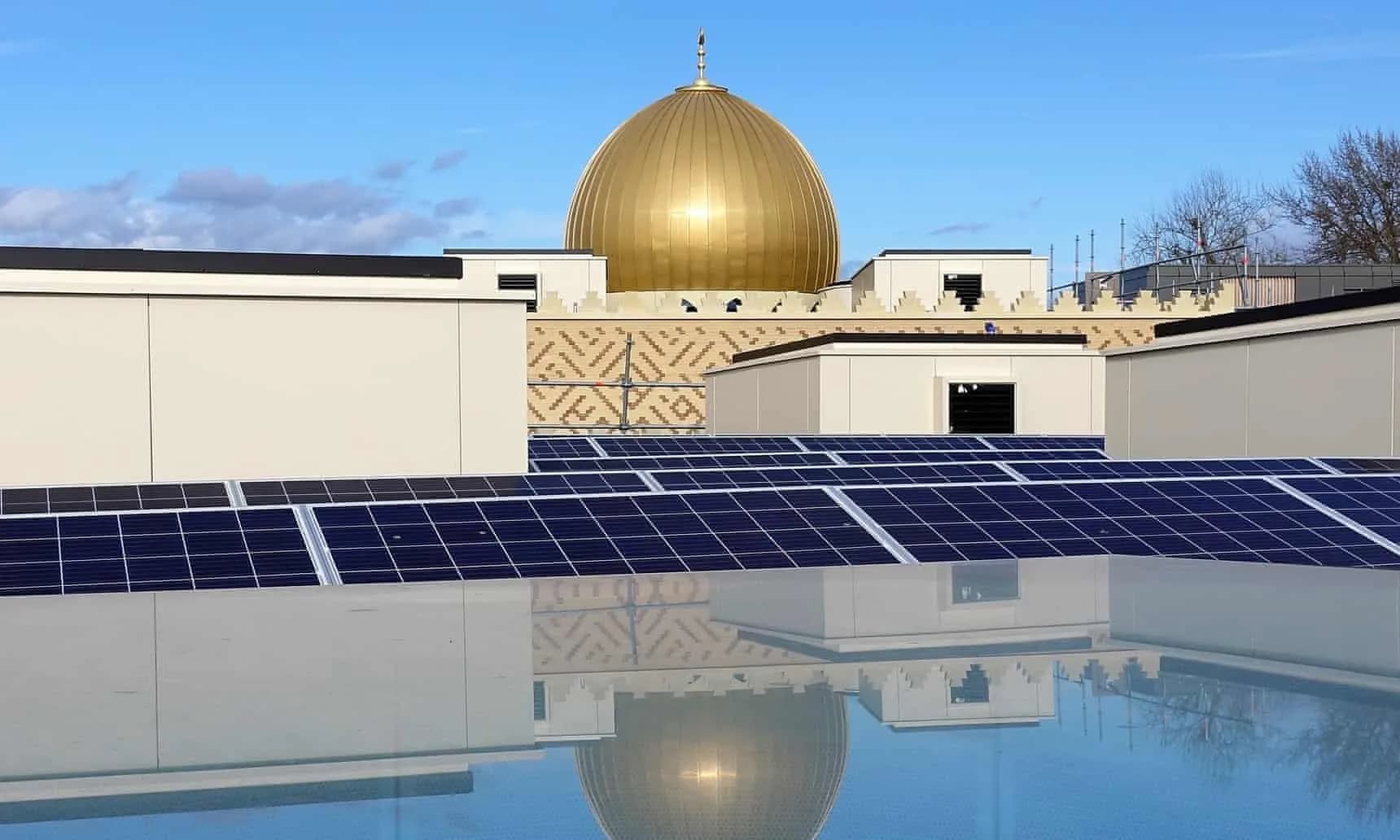
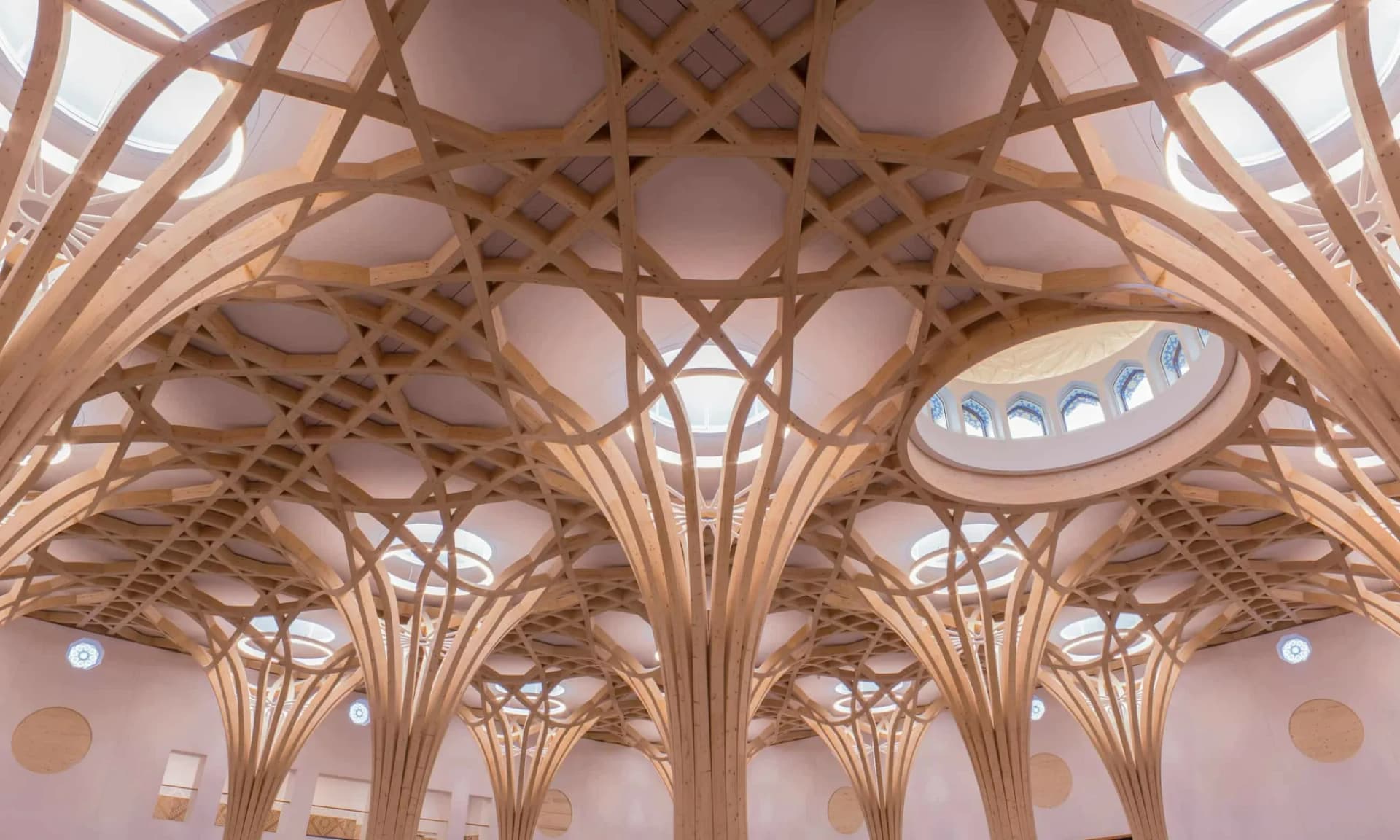
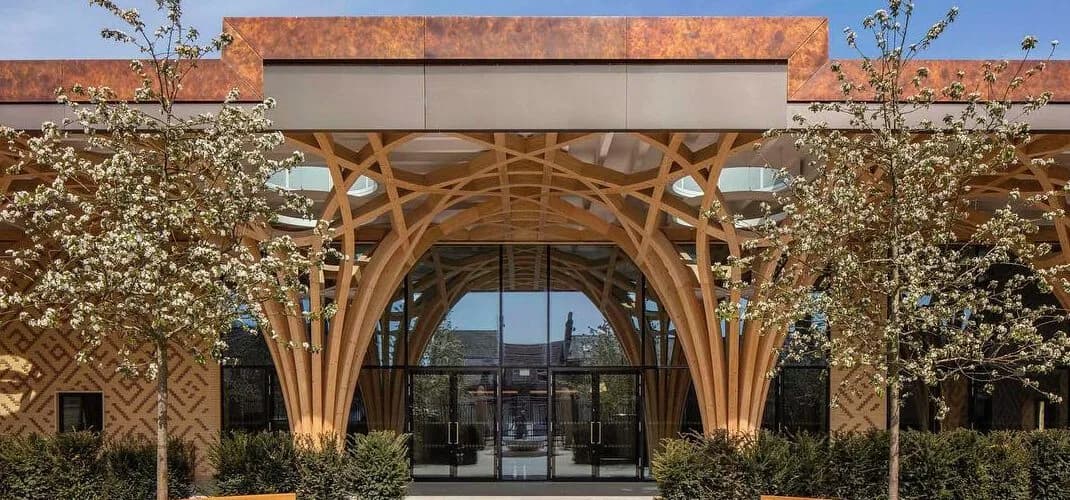
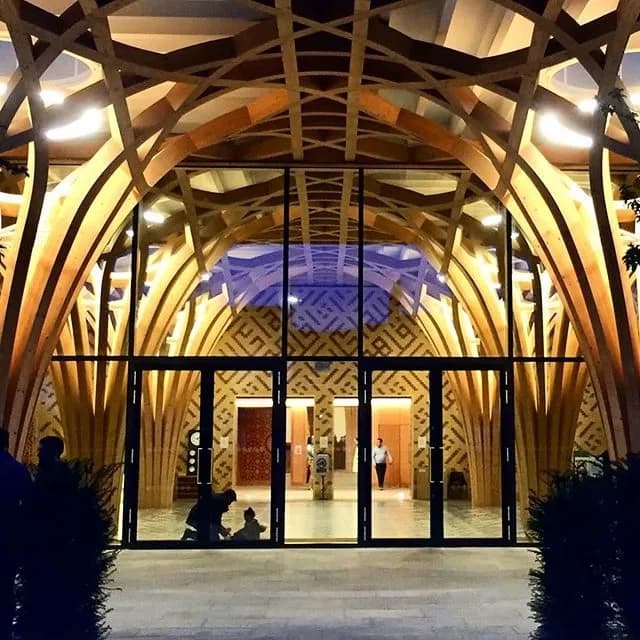
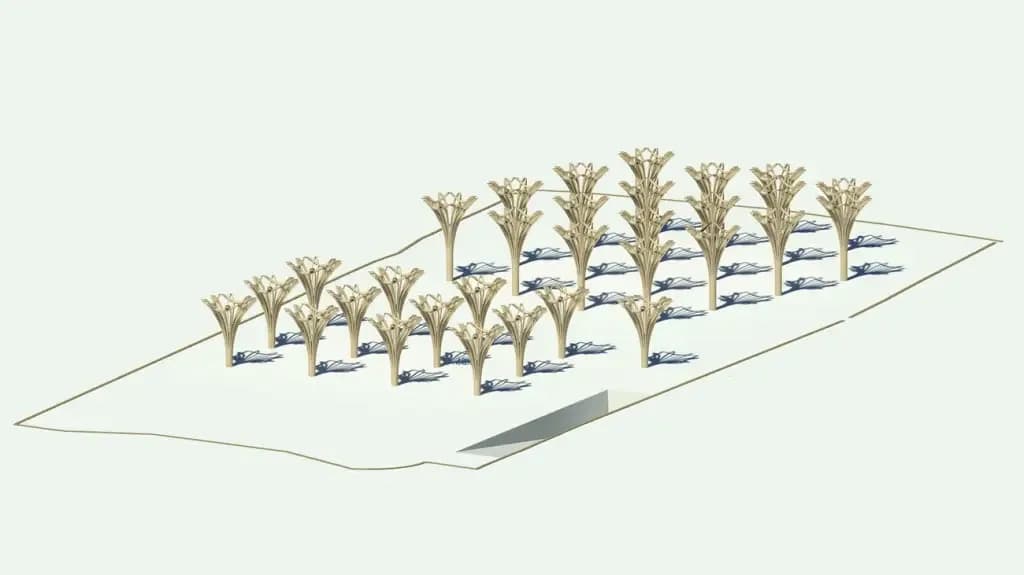
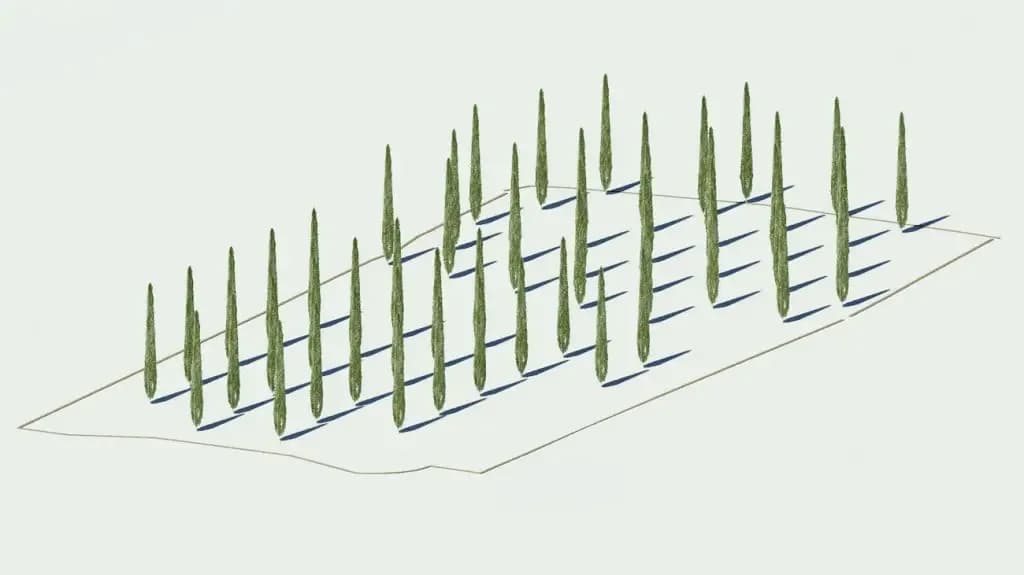
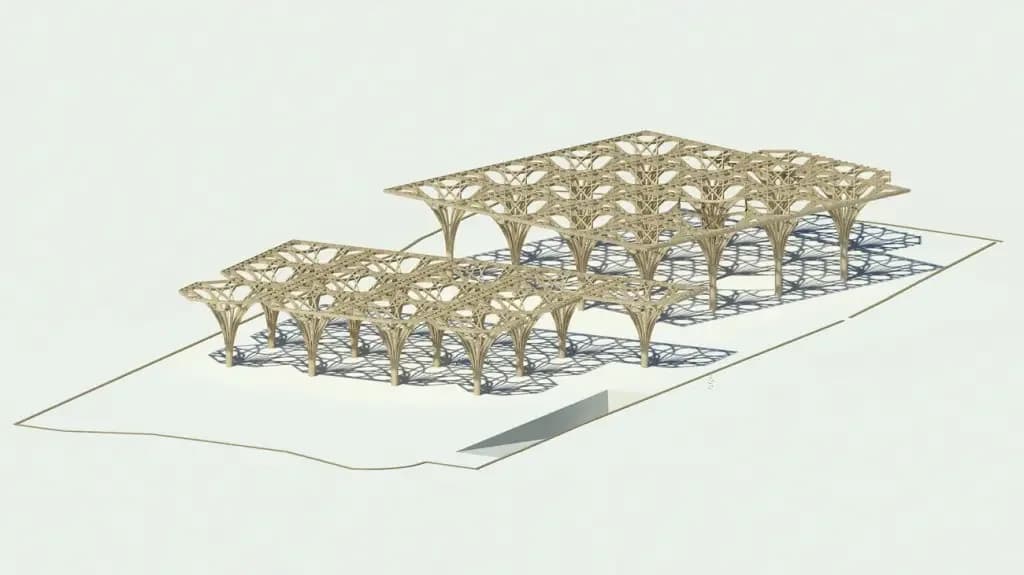
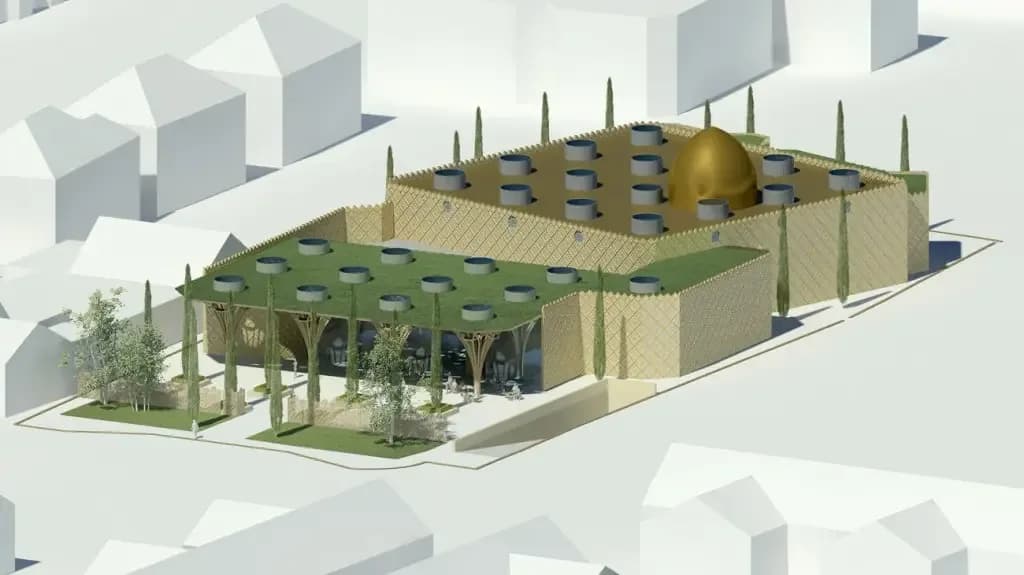
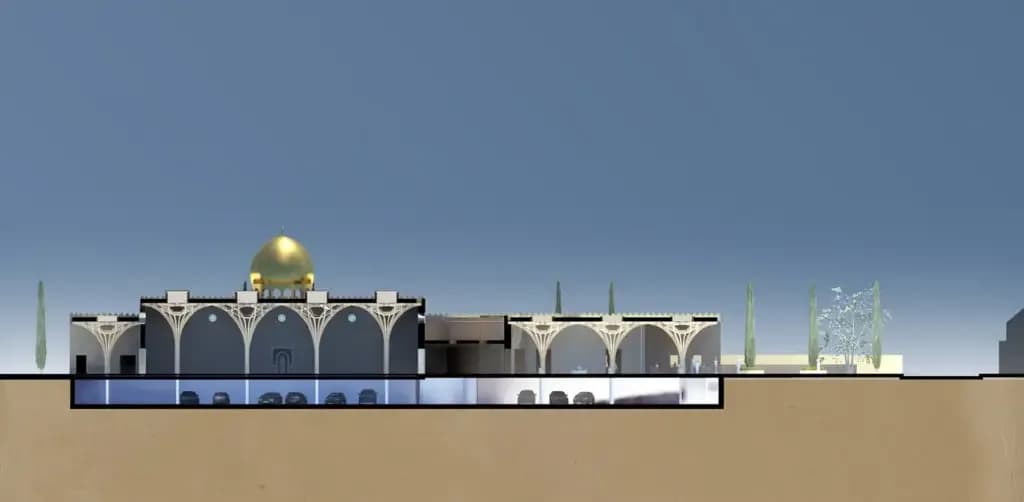
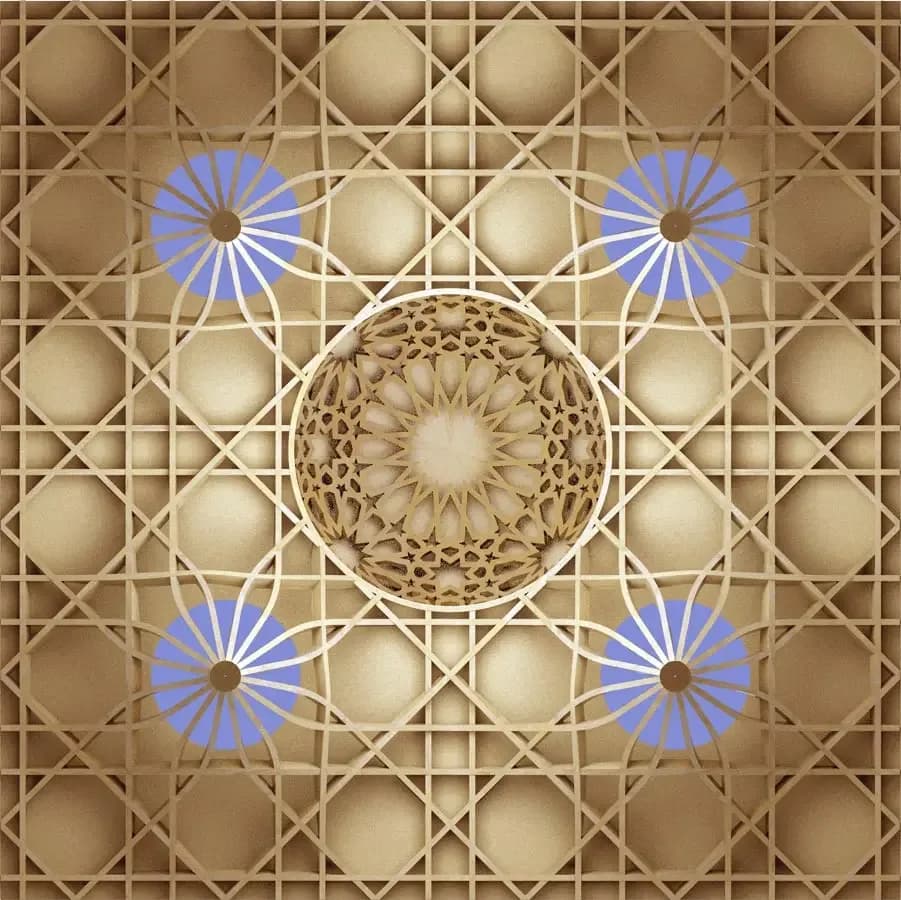
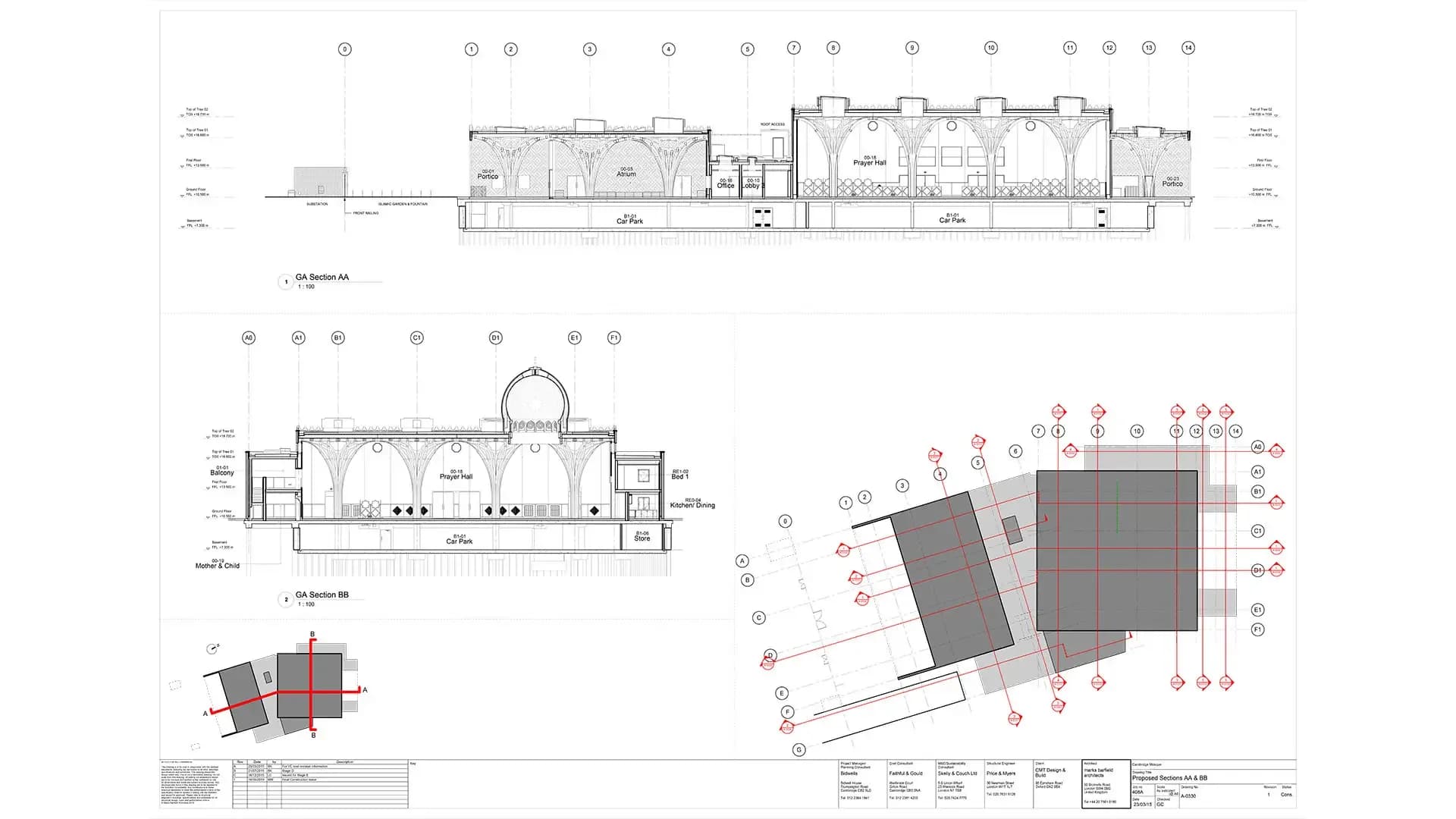
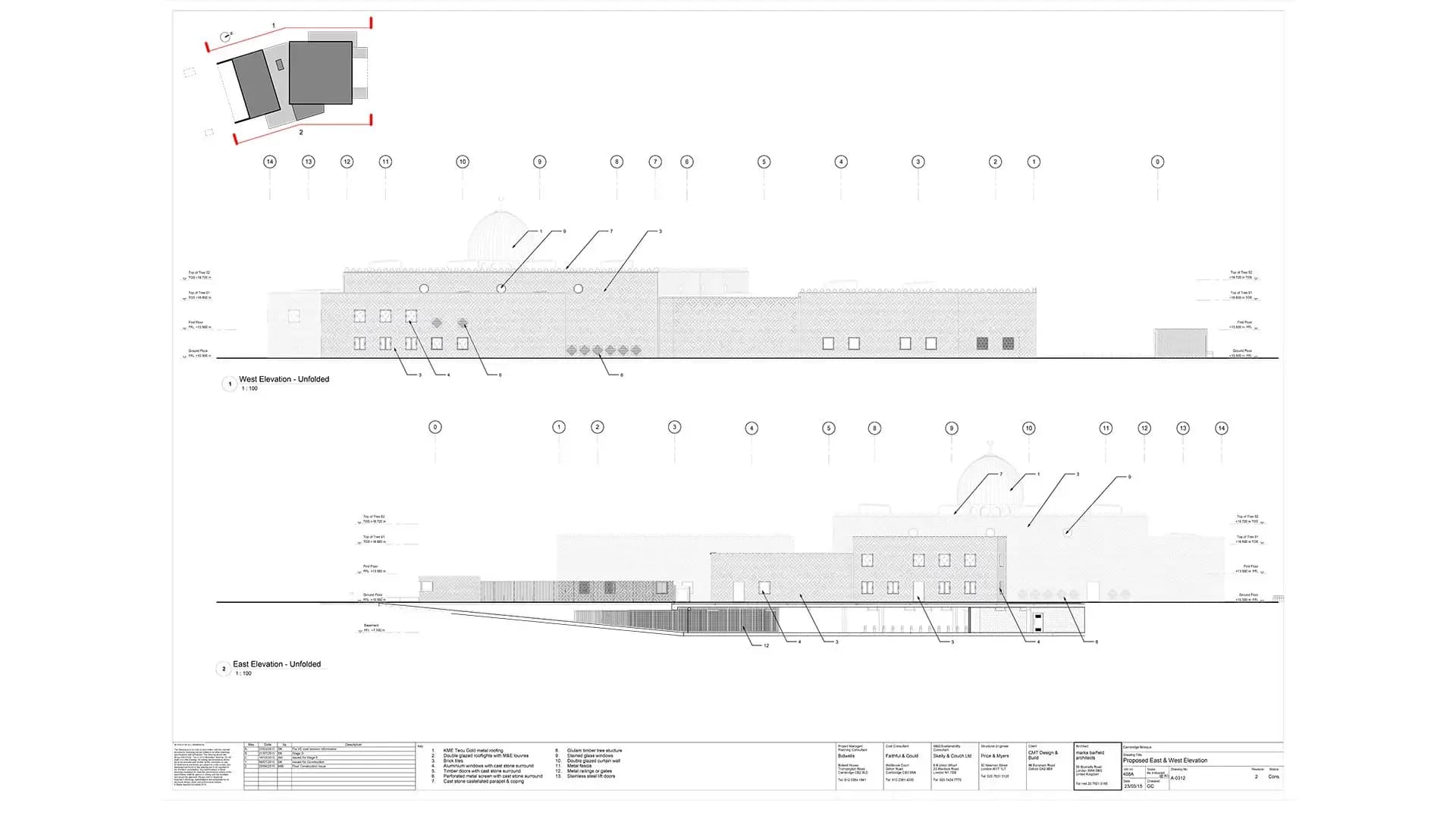
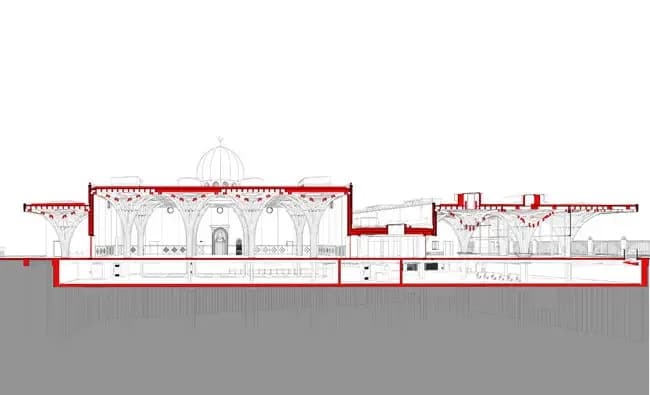
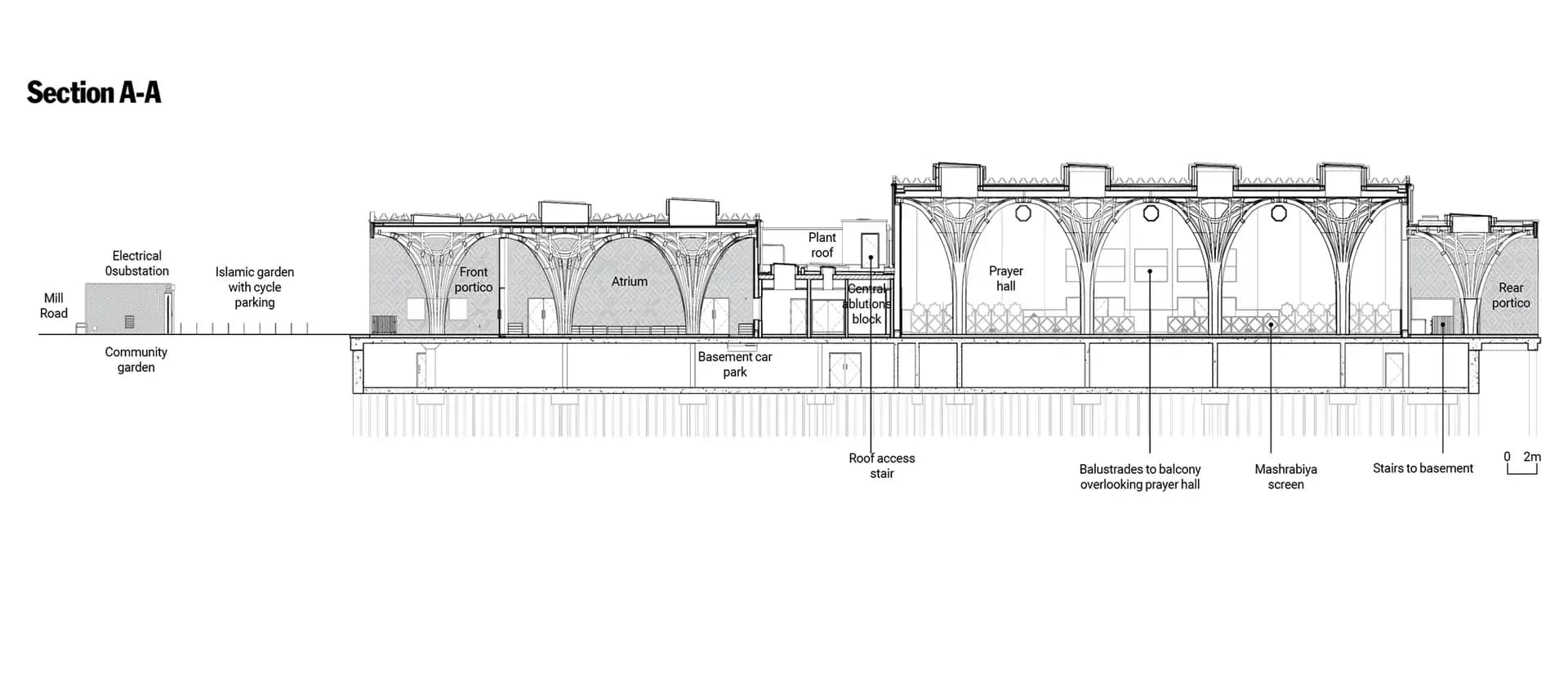
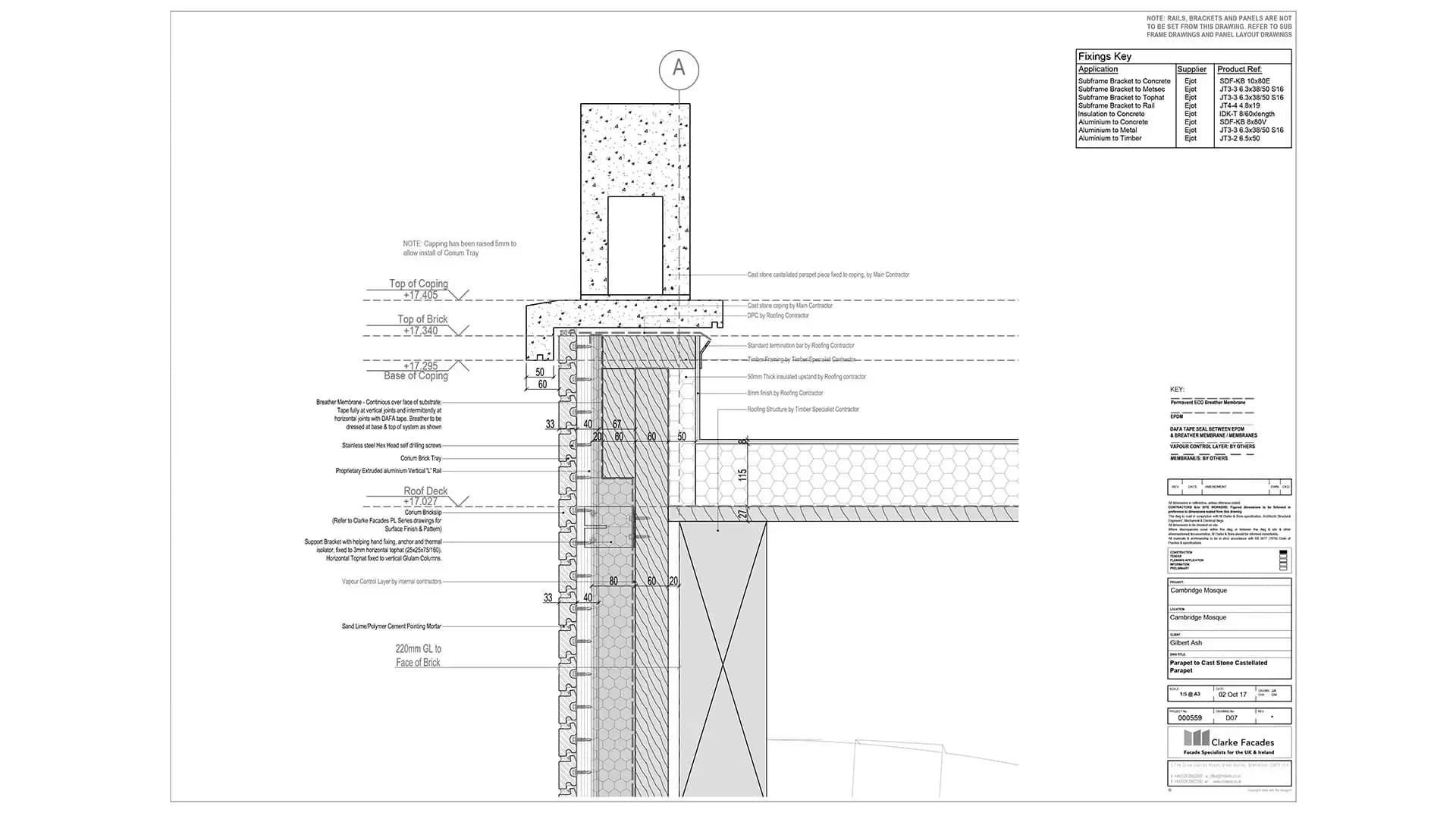
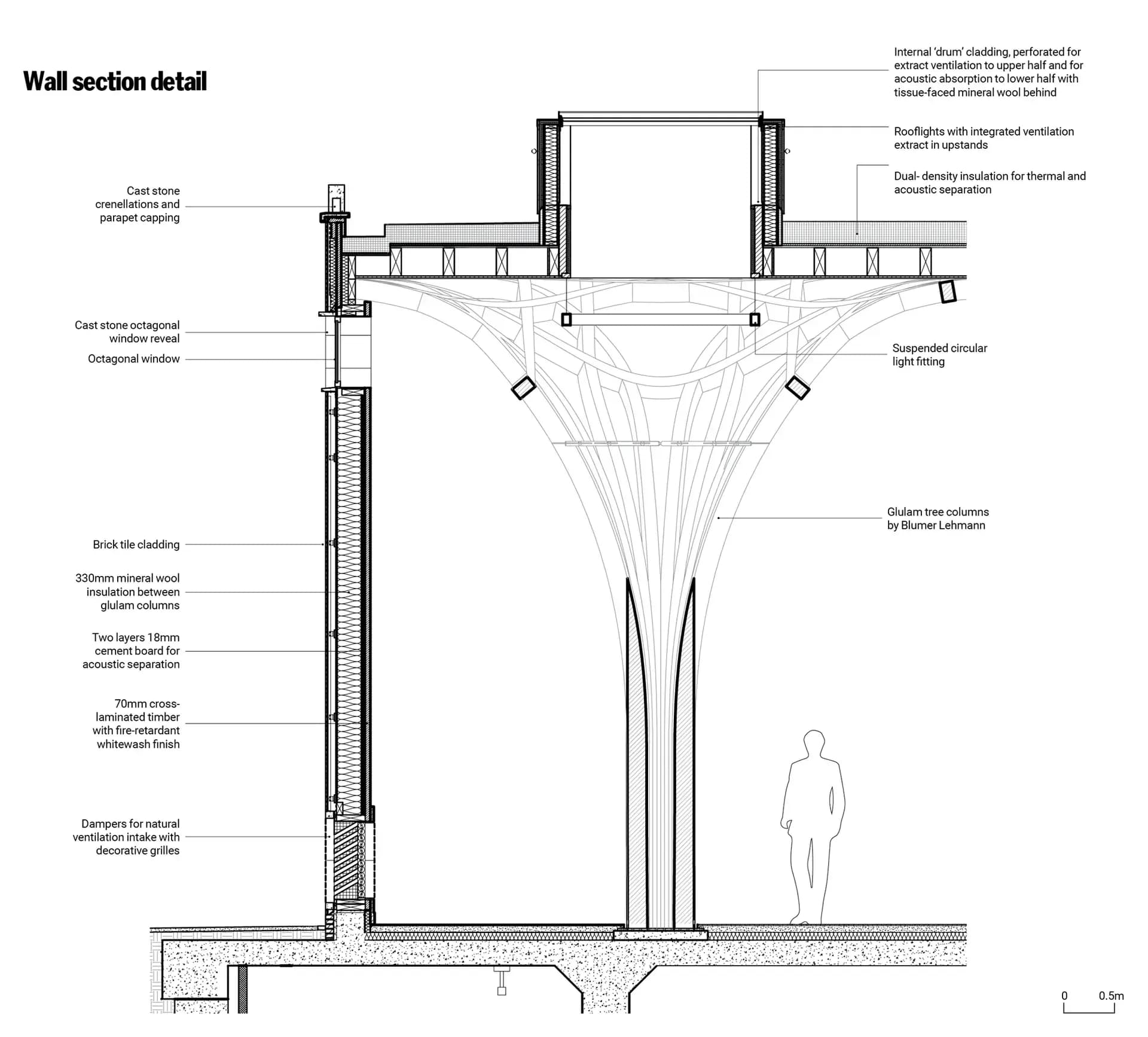
The defining feature of Cambridge Mosque is its timber structure. The columns, or ‘trees’, reach up to support the roof in an interlaced octagonal lattice vault structure evocative of English gothic fan vaulting, famously used at the nearby King’s College Chapel. The timber is sustainably sourced spruce which has been curved and laminated. Roof lights are located above the ‘trees’, bathing the prayer hall in light. The octagonal geometry has strong symbolism in Islamic art, suggesting the cycle of inhalation and exhalation – the ‘Breath of the Divine’. In 2009, Marks Barfield Architects won the competition with the concept of the mosque as a calm oasis within a grove of trees. The link between the local and the Islamic is expressed through the natural world. For centuries, mosques throughout the world have adapted to their local building materials, vernacular, cultural and climatic conditions. Consequently, Marks Barfield Architects too were inspired both by Islamic and English religious architectural traditions. The mosque's design represented a developed the idea of a British Mosque for the 21st century. The defining feature of Cambridge Mosque is its timber structure. The timber columns, or ‘trees’, reach up to support the roof using an interlaced octagonal lattice vault structure evocative of English Gothic fan vaulting, famously used at the Kings College Chapel, Cambridge nearby. The timber is sustainable sourced spruce which is curved and laminated. Roof lights are located above the trees creating a prayer hall bathed in light. The external walls are clad in tiles of the traditional Gault colour with castellated parapets that symbolise the meeting of heaven and earth. Worshippers and visitors take a journey from the street through an Islamic garden, to a covered portico and into an atrium, preparing them in a gradual transition for the contemplation of the prayer hall, which is orientated towards Mecca. Their design of the mosque is committed to sustainability through its advanced eco-design which gives it a near-zero carbon footprint, honours natural forms with sustainable timber vaulting, and reminds the visitor of our connection to nature. This is considered the First Eco-Mosque in the UK. Environmental concerns have been paramount in the design of the new Cambridge Mosque. The building is naturally lit all year round by large skylights in the roof, supplemented by low energy LED bulbs, while photovoltaic cells on the roof help generate renewable energy from sunlight. As well as being very well-insulated and naturally ventilated, the mosque is heated and cooled by locally generated energy, by way of highly efficient heat pumps in the basement that produce far more energy than they consume. This type of heat pump extracts energy from the relatively stable temperature of the air or ground water, heating the building as needed and cooling it at times of high occupancy or excess heat gains. Grey water and rainwater are harvested to flush WCs and irrigate the grounds. The building’s carbon footprint – which is already low – will improve over time as mains electricity from renewable sources becomes more available. Green transport has also been taken into consideration in the design: there is ample space for bikes and it’s easily accessible by pedestrians, while an underground car park frees up space on site for the mosque and gardens.
Background
History
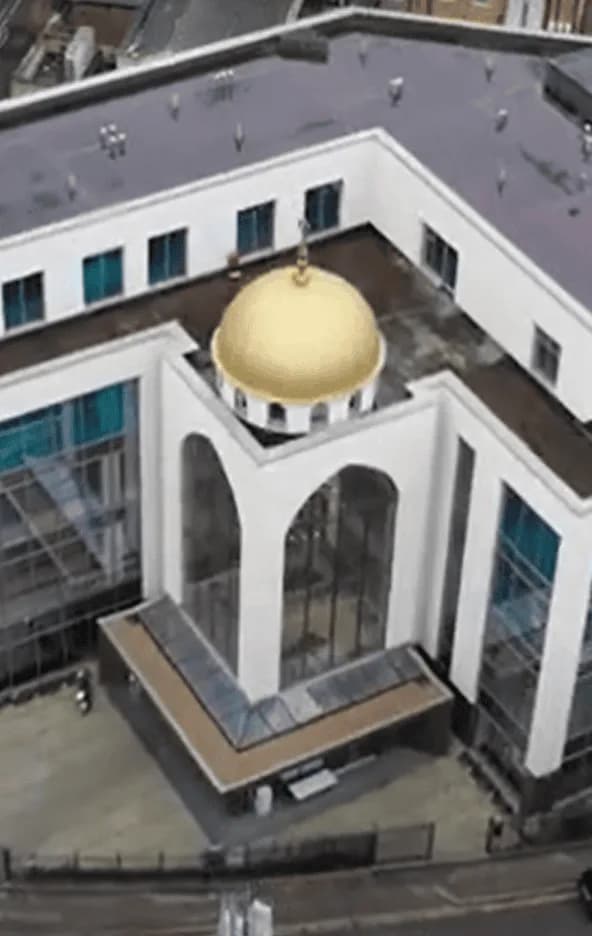
The Cambridge Central Mosque, also known as Masjid AlTawheed, is Europe's first eco-friendly mosque and the first purpose-built mosque within the city of Cambridge, England. Its mandate is to meet the needs of the Muslim community in the UK and beyond by facilitating good practice in faith, community development, social cohesion & interfaith dialogue. The Cambridge Central Mosque was opened to the public on 24th April 2019, and in addition to the mosque's dedicated areas (ablution, teaching, children's area, morgue) there will be a café, teaching area and meeting rooms for use by the local Muslim and non-Muslim communities.
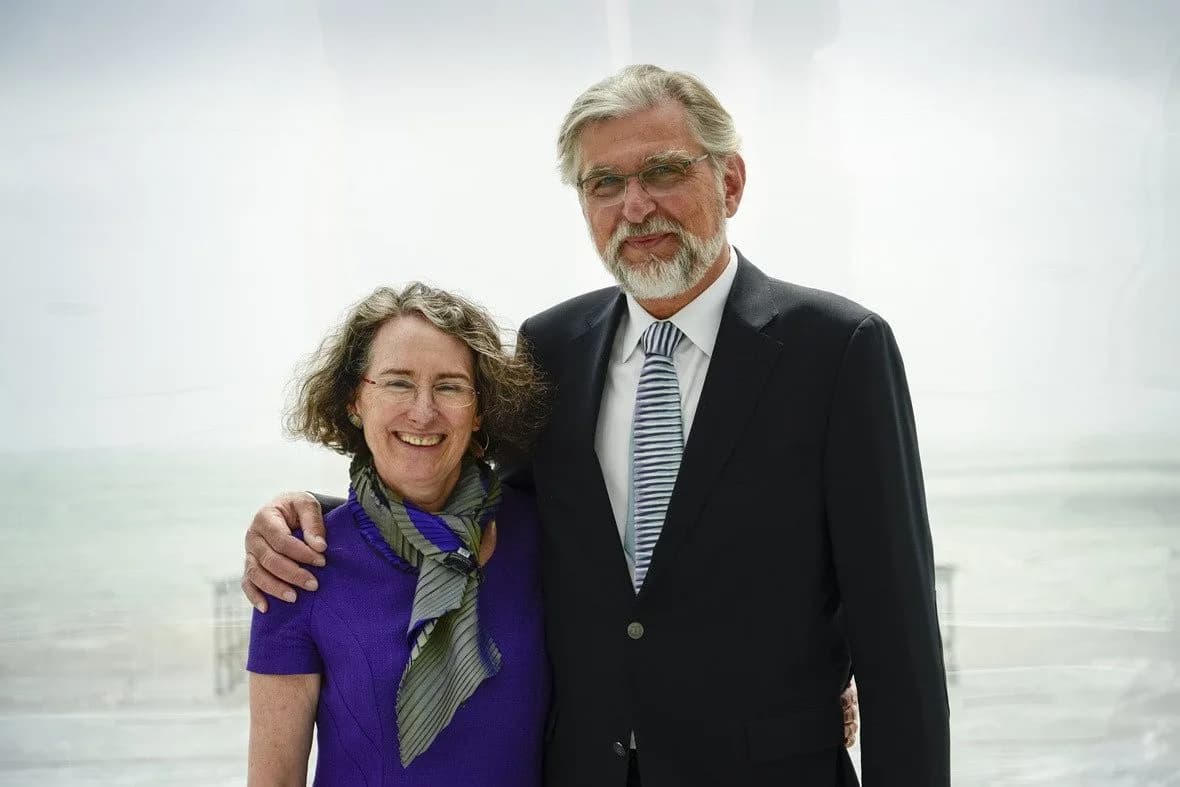
The Muslim Academic Trust (MAT) proposed the site location to be situated in the Romsey area of Mill Road in Cambridge. Thereafter, the Cambridge Mosque Project was established in 2008 by Dr Timothy Winter, who converted to Islam over 40 years ago and took the name Abdal Hakim Murad and is a lecturer in Islamic studies at the University of Cambridge, to raise funds for the project. In 2009, Marks Barfield Architects won the competition to design the building with their concept of the mosque as a calm oasis within a grove of trees. With the collaboration of UK-based specialists such as the world leading expert in sacred architecture and Islamic geometry Professor Keith Critchlow, UK’s leading Islamic garden designer Emma Clark, and artists Amber Khokhar and Ayesha Gamiet, among others, the final design marries traditional Islamic architecture, geometry and horticulture with indigenous English materials, plants and craftsmanship to create a unique synthesis.
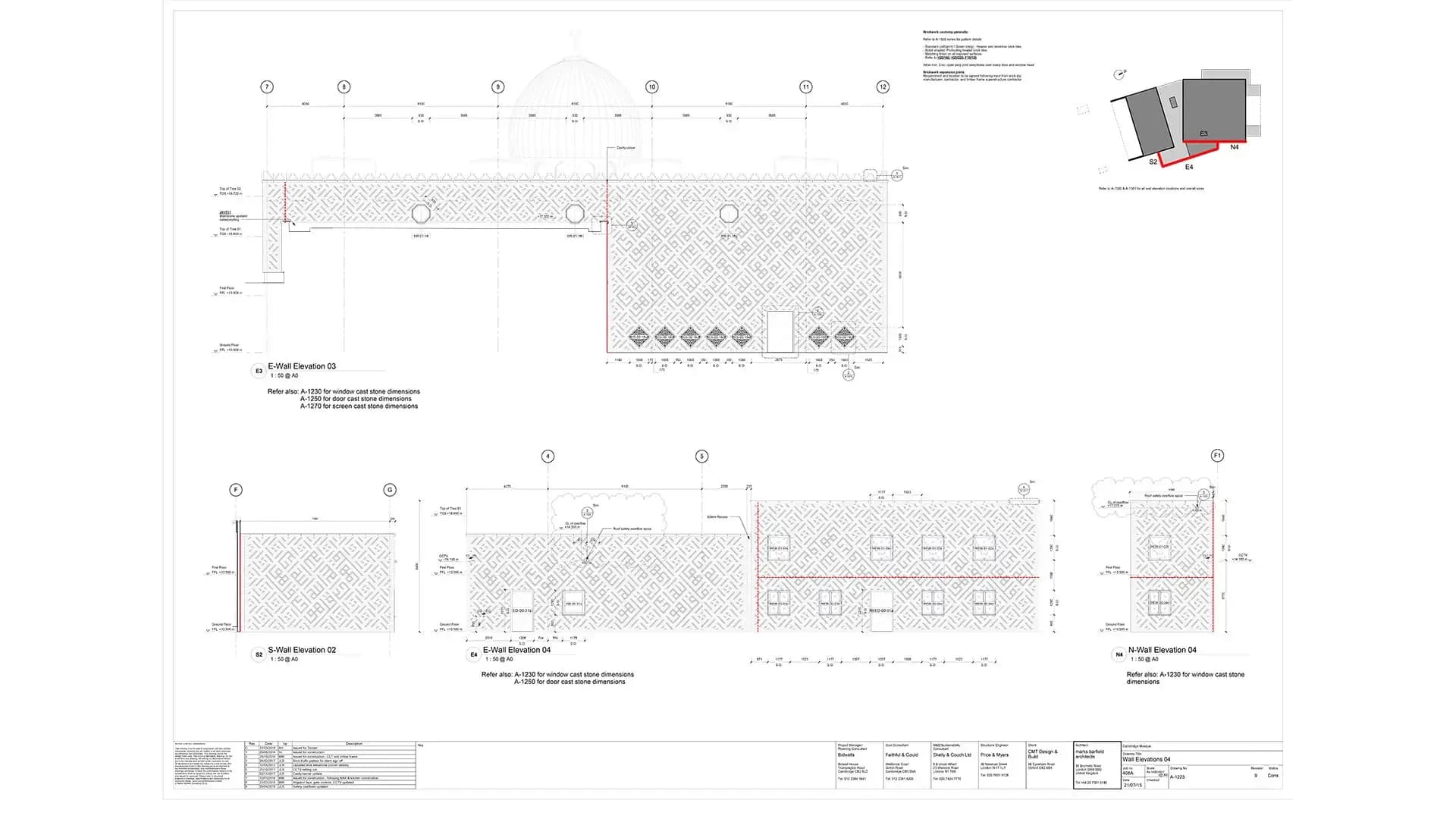
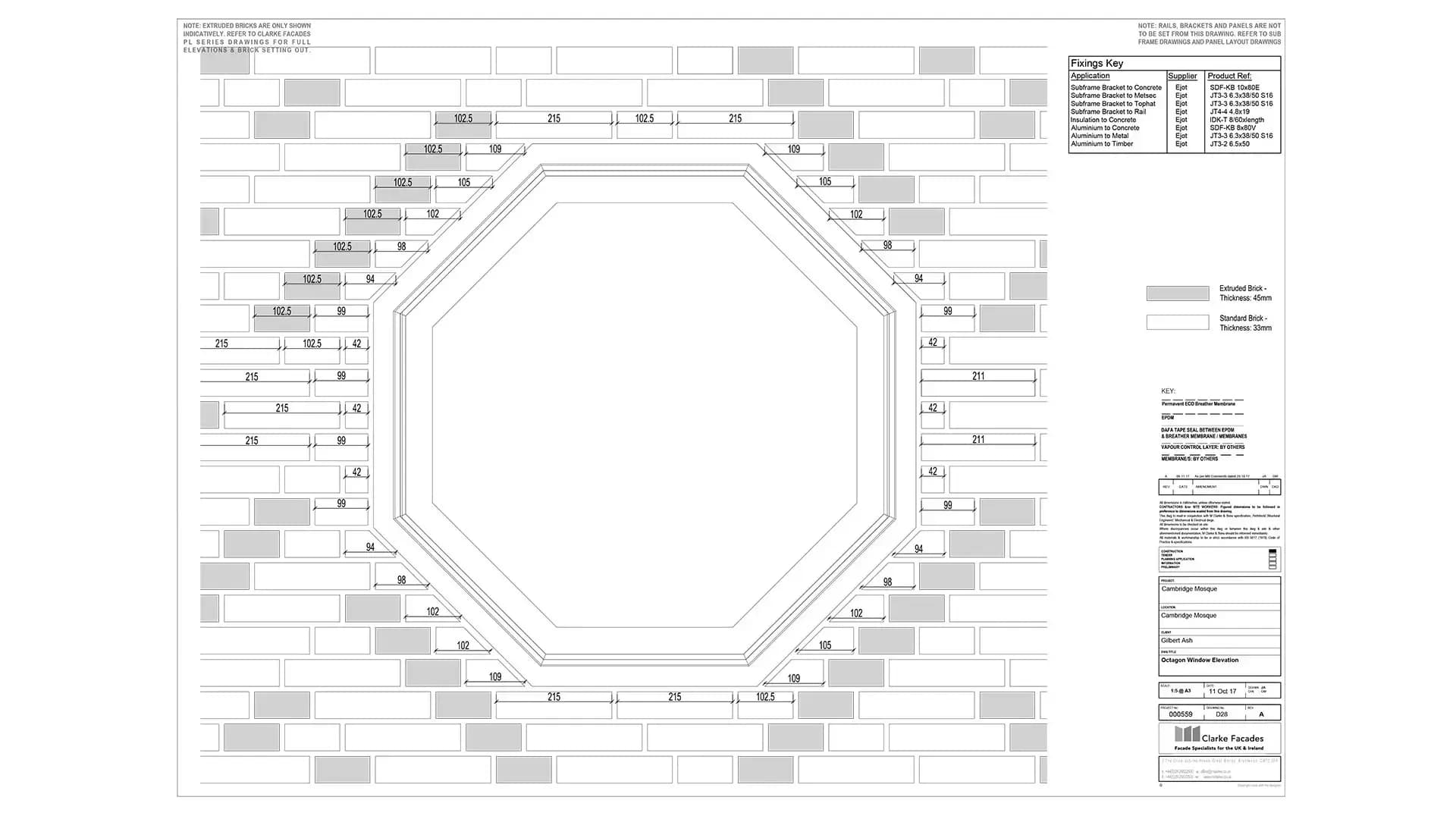
At three stories high, with a façade that subtly weaves Qur’anic phrases into the Gault brickwork that is traditional in Cambridge, the mosque complements its neighboring structures on Mill Rd, while the gardens and café make it a welcoming space for all members of the community. Its emphasis on sustainability and high reliance on green energy not only makes this Europe’s first eco-mosque, it has also become a true landmark building for the city of Cambridge and its diverse residents.
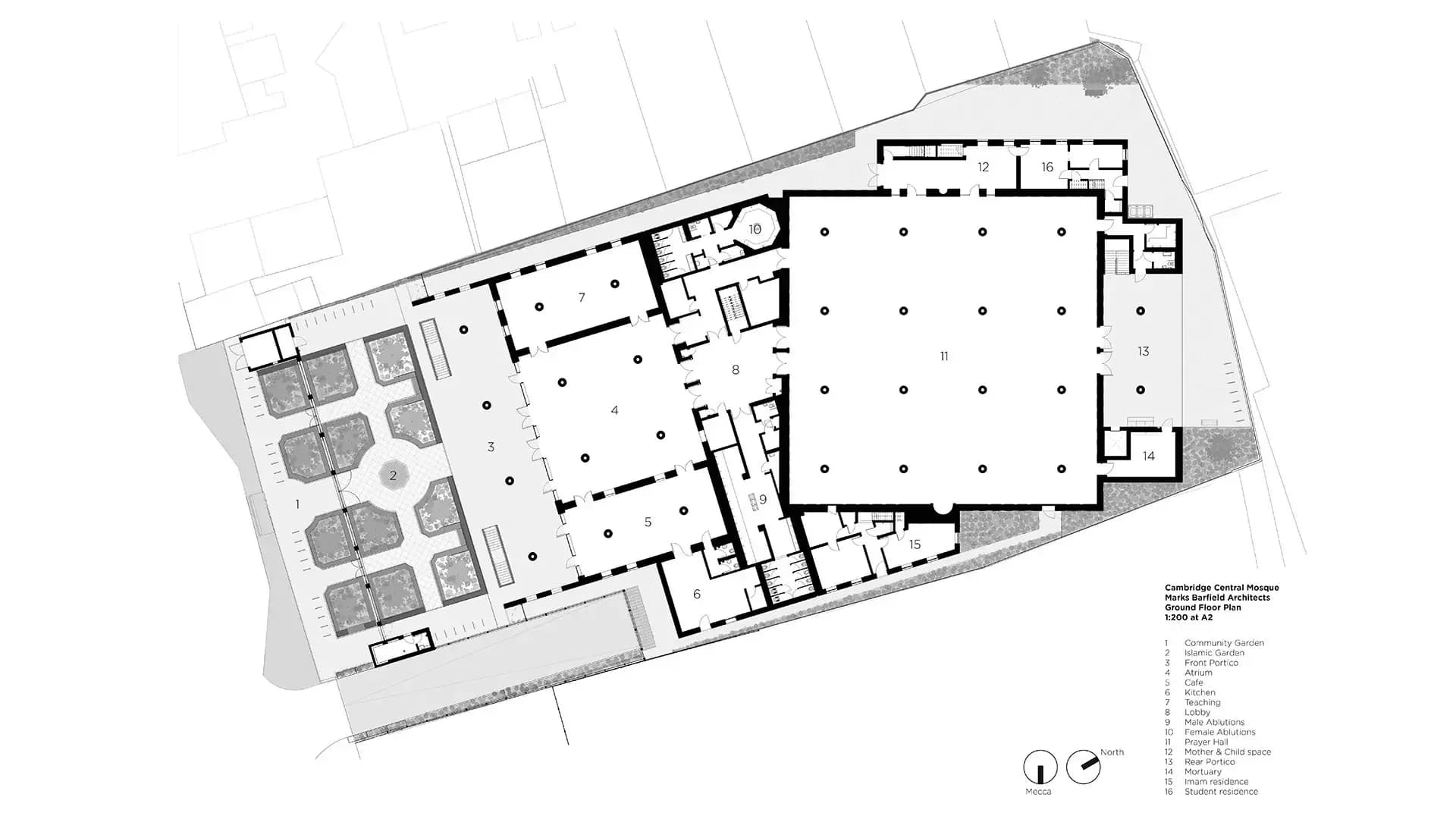
Worshipers and visitors enter via an Islamic garden before passing through a covered portico and then an atrium, preparing them gradually for the contemplation of the prayer hall, facing Mecca. This combination of gardens with whispering fountains and vaulted prayer spaces has been used to great effect throughout Islamic history – for instance, at the Alhambra – and it reminds us of the interconnection of humans and the natural world. The gardens enhance the feeling of an ‘oasis’ that the building embodies.
Where
Location
309 Mill Rd, Cambridge CB1 3NN, UKOpen in Google Maps
Gallery
Photographs 15
Plans & sections
Architectural drawings 15
References
- 01middleeastarchitect.com/42044-cambridge-reveals-europes-first-eco-mosquemiddleeastarchitect.com
- 02theguardian.com/artanddesign/2019/mar/17/cambridge-new-mosque-marks-barfieldtheguardian.com
- 03cambridgecentralmosque.org/the-mosquecambridgecentralmosque.org
- 04marksbarfield.com/projects/cambridge-mosquemarksbarfield.com
- 05brick.org.uk/bulletin/cambridge-mosquebrick.org.uk