Coming soon 1
Abstract
About this journal article
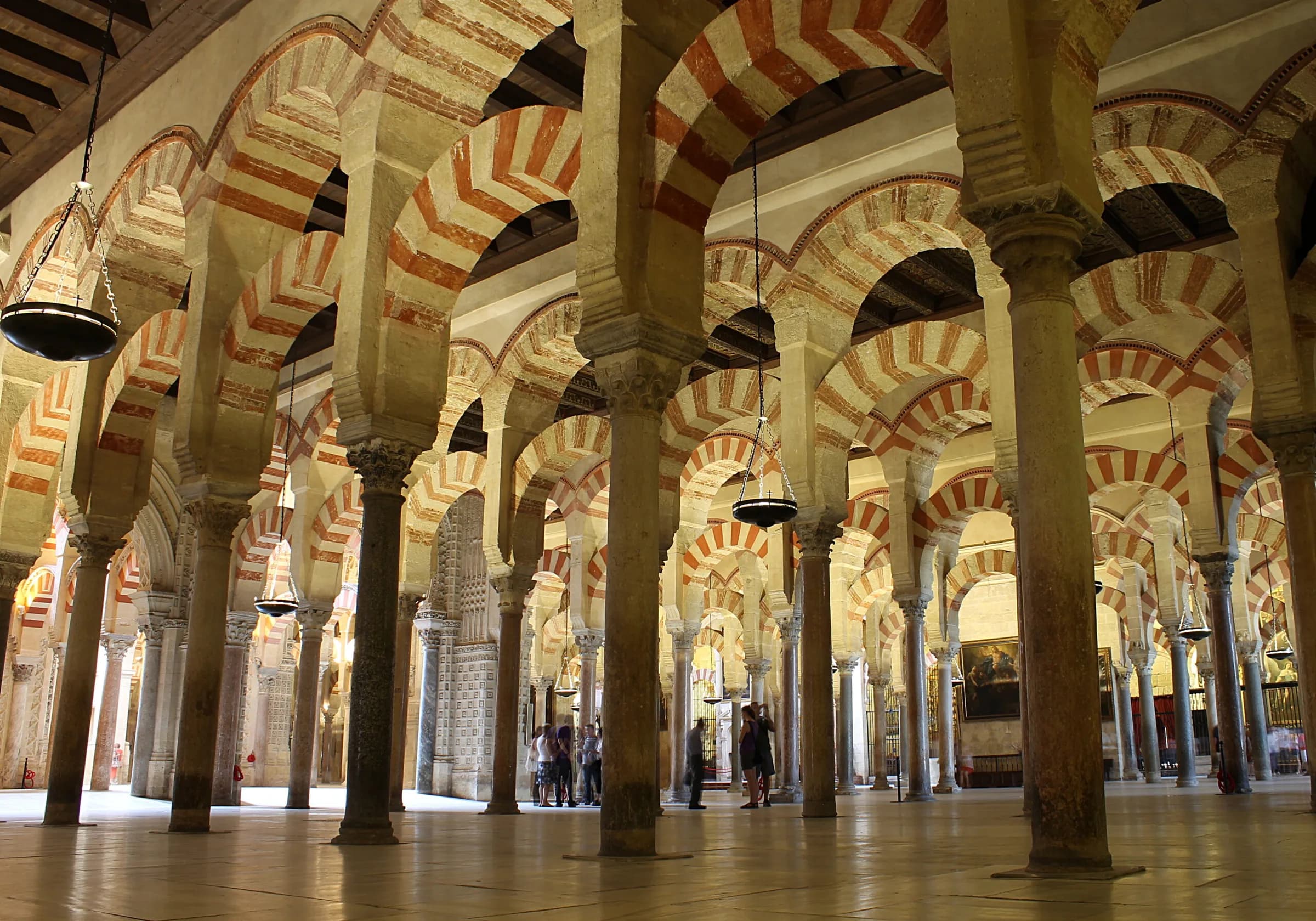
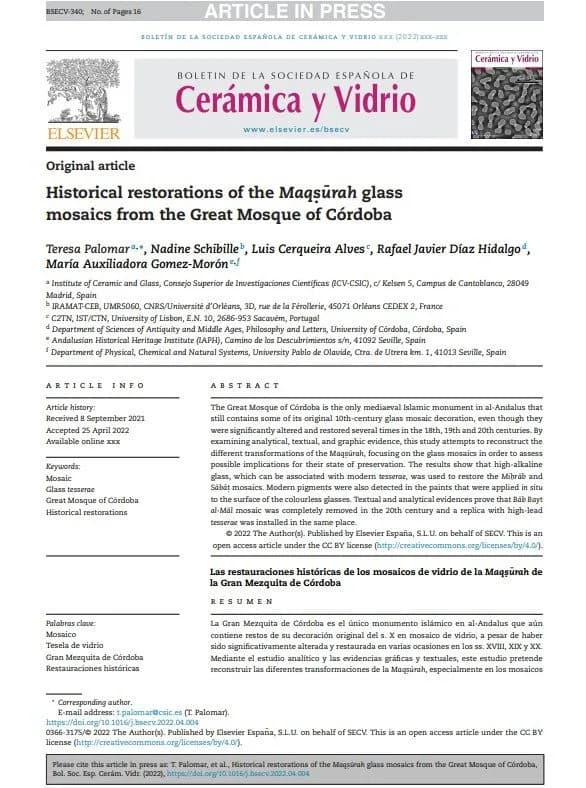
The Great Mosque of Córdoba is the only mediaeval Islamic monument in al-Andalus that still contains some of its original 10th-century glass mosaic decoration, even though they were significantly altered and restored several times in the 18th, 19th and 20th centuries. By examining analytical, textual, and graphic evidence, this study attempts to reconstruct the different transformations of the Maqṣūrah, focusing on the glass mosaics in order to assess possible implications for their state of preservation. The results show that high-alkaline glass, which can be associated with modern tesserae, was used to restore the Miḥrāb and Sābāṭ mosaics. Modern pigments were also detected in the paints that were applied in situ to the surface of the colourless glasses. Textual and analytical evidences prove that Bāb Bayt al-Māl mosaic was completely removed in the 20th century and a replica with high-lead tesserae was installed in the same place.
Chicago style
Cite this
Palomar, Teresa, Nadine Schibille, Luis Cerqueira Alves, Rafael Javier Díaz Hidalgo, and María Auxiliadora Gomez-Morón. "Historical restorations of the Maqṣūrah glass mosaics from the Great Mosque of Córdoba." Boletín de la Sociedad Española de Cerámica y Vidrio 62, no. 3 (2023): 204-219.
Topics
Subjects & tags
Files